






Two decisions decide almost every elevator door parts order: whether the unit sits on the car or on the landing, and whether the door opens centre or side. Get those two right and the model number follows; get one wrong and the operator will not fit the shaft.
This page explains the six door units we list, the fields you need to measure before asking for a price, and how to read the model code off an old unit. If you already have the model, send it with the opening height and we will confirm the match.
Car or landing, centre or side: the four elevator door parts families
Elevator door parts split along two independent axes. Position says where the unit is bolted; opening type says how the panels travel. Every model we list falls into one of four cells, and each cell has different installation hardware.
| Position | Opening | What moves | Models on this page |
|---|---|---|---|
| Car (inside the cabin) | Centre | Two panels part from the middle, driven by a car-top operator | J2511 C2A, OMJ102A |
| Car | Side | Panels stack to one side, driven by a car-top operator | OMJ502A |
| Landing (on each floor) | Centre | Passive mechanism, pushed open by the car door vane | T2200 C2A, OCM01-BA |
| Landing | Side | Passive mechanism with a single sliding panel | OCM502A |
What a car door operator actually does
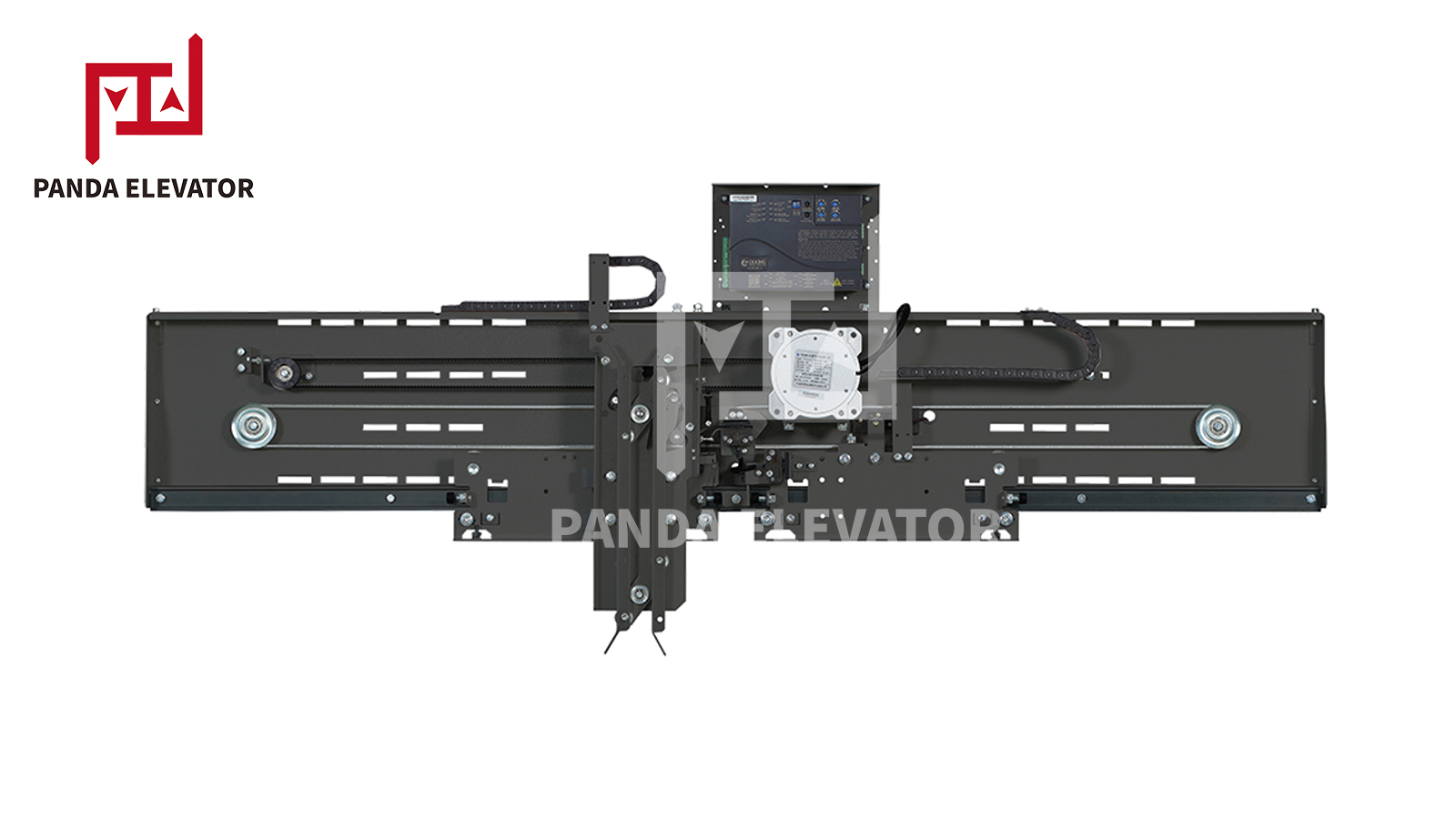
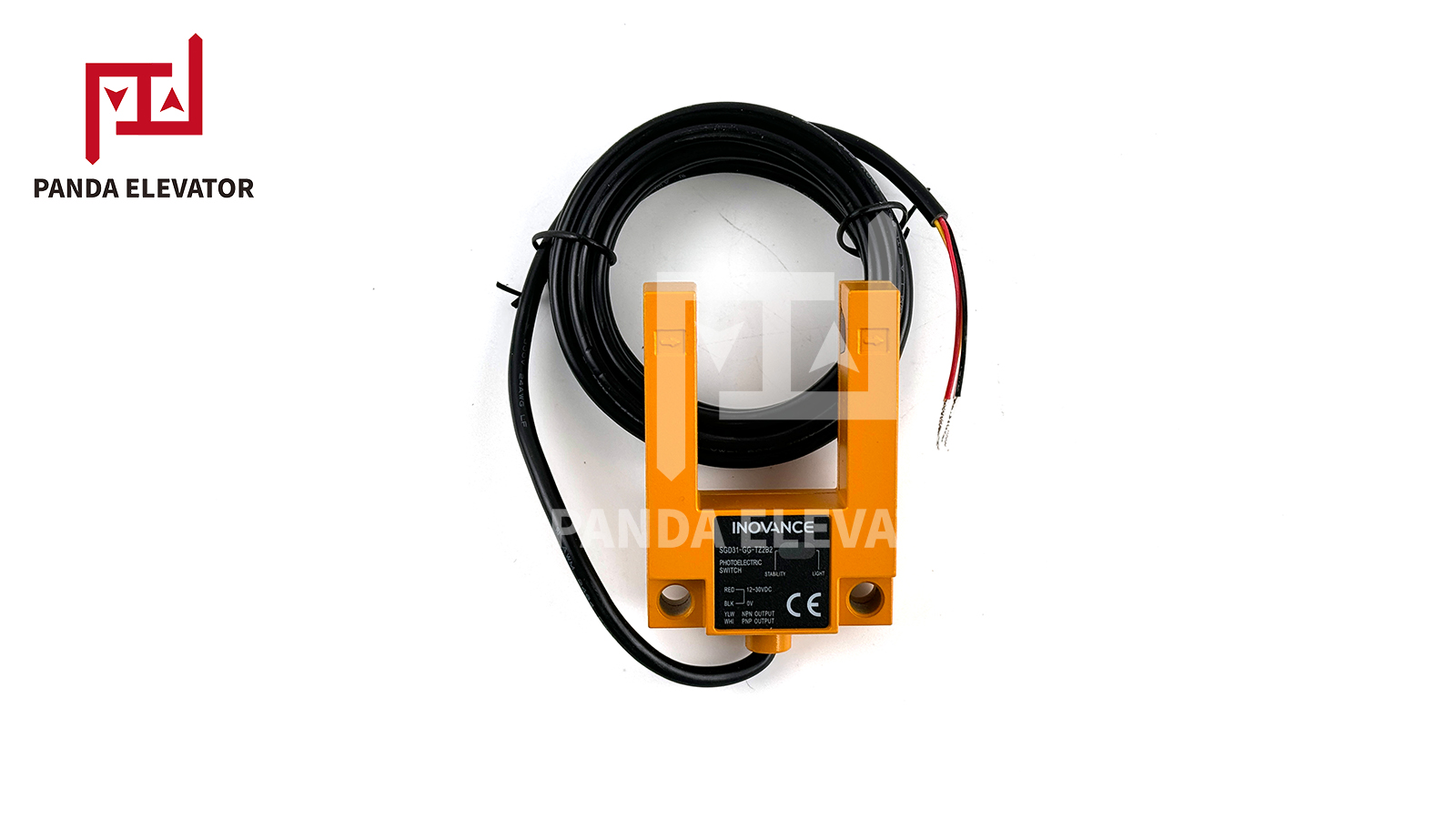
The operator is the powered half. It carries the motor, the belt or screw drive, the clutch and the door lock circuit, and it is mounted on the car roof. Because it is powered, it also carries the switches that tell the controller the door is closed and locked. When a door behaves erratically on one floor only, the operator is rarely the cause — look at the landing mechanism on that floor first.
What a landing door mechanism does
The landing mechanism has no motor. Its panels are moved by the car door, which engages a vane and rollers as the car arrives. That is why a landing unit can look mechanically sound and still fail: the fault is often the engagement, not the mechanism. When ordering a landing mechanism, the two numbers that matter are the opening height and the distance between the vane and the roller.
How to tell centre from side without a nameplate
Stand in the doorway and look at the closed panels of the existing unit. One panel sliding behind a fixed panel is a side opening. Two panels of roughly equal width meeting in the middle is a centre opening. Three or four panels that fold to both sides are a multi-panel centre opening and need a different mechanism again — send a photo, because model codes do not encode panel count consistently across brands.
Model index: what each elevator door parts unit is built for
Six units, one table. The opening height (HL) column is the field buyers most often leave out, and the one that causes the most returns.
| Model | Position | Opening | Key field | Notes |
|---|---|---|---|---|
| J2511 C2A | Car | Centre | HL 2000–2300 mm | Complete car door operator, car-top mounting |
| OMJ102A | Car | Centre | Car-top installation | Operator only; asks for opening width and panel count |
| OMJ502A | Car | Side | Car-top installation | Side-opening variant of the same family |
| T2200 C2A | Landing | Centre | Opening height | Landing mechanism; one per floor |
| OCM01-BA | Landing | Centre | Opening height | Landing mechanism, lighter frame |
| OCM502A | Landing | Side | Opening height | Single-panel side-opening landing unit |
How to read an elevator door parts model code
Model codes are not standardised across factories, but the pattern is consistent enough to be useful when you are holding an old unit with no paperwork.
The letters indicate family, not specification
In our range, J and OMJ prefixes are car door operators; T and OCM prefixes are landing mechanisms. The number that follows identifies the frame generation — a larger number does not mean a heavier duty unit. The suffix after the space is a configuration code, not a power rating.
What the suffix tells you
Suffixes such as C2A or BA encode panel arrangement and drive detail, so the same base model can appear with two different suffixes and fit two different shafts. Treat the suffix as mandatory information: quoting a base model without it is how buyers end up with a mechanism that bolts on but does not align.
When the code is unreadable
Photograph the nameplate, the vane engagement point, and the full opening from the landing side. Those three images are enough to identify the family in most cases. If the unit has been repainted or the plate is gone, measure the opening height, the panel width, and the distance from the sill to the hanger rail — with those three numbers we can narrow the range even without a code.
Replacement and new installation need different information
The same part, two very different conversations. A replacement has to match what is already in the shaft; a new installation only has to match the design.
Replacing an existing unit
You need the old model, the opening height, and a photo of the mounting brackets. Bracket hole spacing is the field that most often differs between generations, and it is not printed anywhere on the unit.
Expect to reuse the existing vane and lock unless they are worn — replacing the mechanism usually does not require replacing the landing door panels.
Equipping a new shaft
You need the clear opening width and height, the panel count, the car interior width, and the travel. The mechanism is then selected from the design, not measured off an existing unit.
Order the car operator and the landing mechanisms together so the vane engagement geometry is matched by the supplier rather than on site.
The measurements worth taking before you write an enquiry
- Clear opening height — sill to lintel, not panel height.
- Clear opening width — between finished jambs.
- Panel count and arrangement — two panels, three, or four; centre or side.
- Car interior width — decides the operator length that will fit on the roof.
- Mounting bracket spacing — for replacements, the single field that causes the most mismatch.
What fails first on an elevator door, and what it tells you
Door faults are the most common callout on any lift, and most elevator door parts failures are not the operator. Knowing which part is likely to be worn saves a wrong order.
Doors reopening on their own
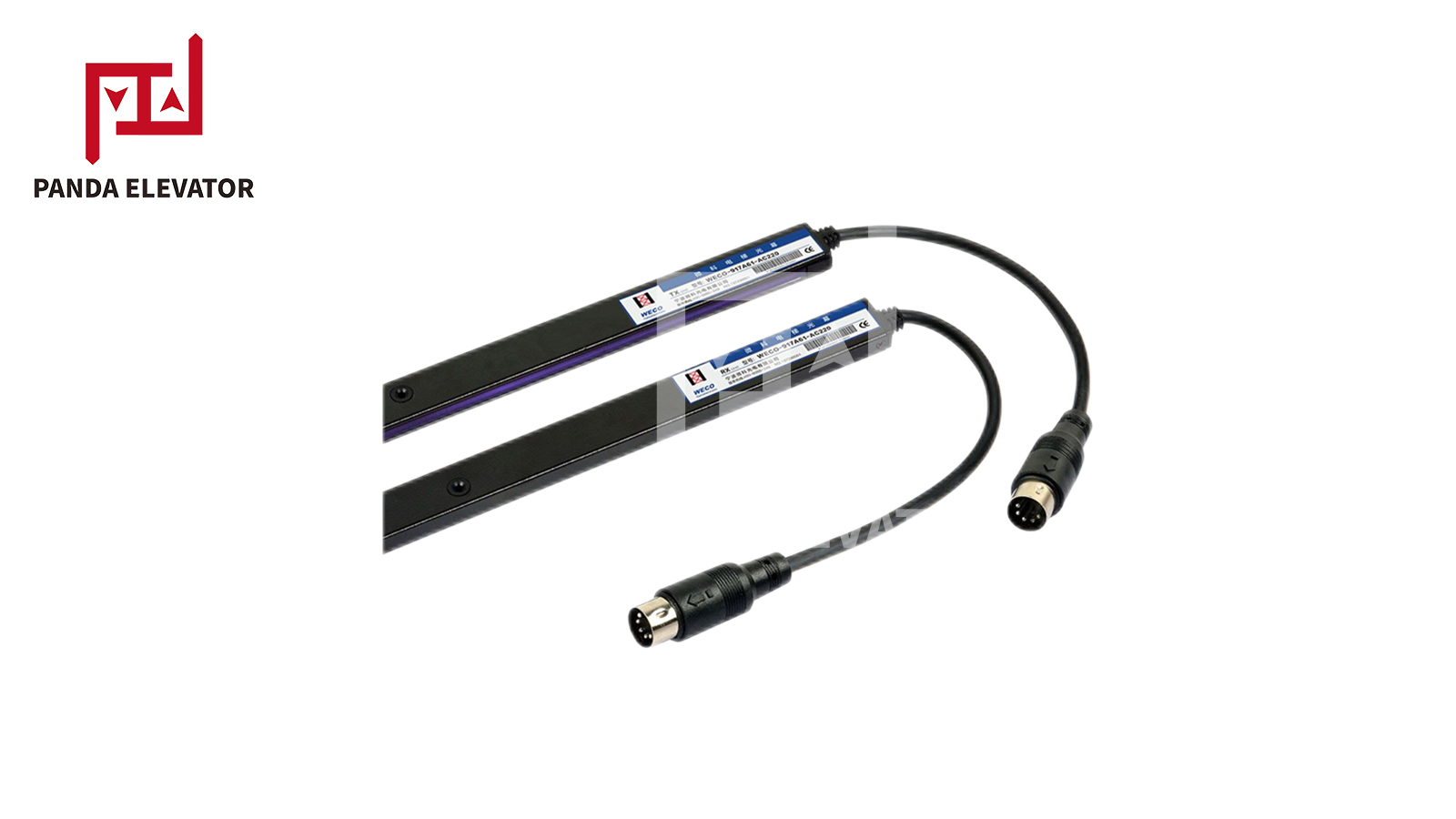
Usually the light curtain or the safety edge, not the operator. If the car reopens at every floor, look at the curtain first; if it happens at one floor, look at the landing mechanism and the sill.
Doors closing slowly or stalling mid-travel
Belt tension, roller wear, or a track that has picked up debris. On a car operator this is a mechanical service item long before it is a parts order.
Doors closing but the car will not move
The controller is not seeing the door lock. That is a switch and wiring fault, and it is worth checking the lock contact before ordering any door hardware.
Send us the model and the opening height. We will tell you whether the unit matches, and what else in the same shaft usually needs replacing at the same time.
How many of each door part a shaft needs
Quantity errors on door parts are rarely a supplier problem. They come from counting the wrong thing, and the count is different for every family in this page.
| Part | Count per shaft | Counted by |
|---|---|---|
| Car door operator | 1 | One per car, regardless of how many floors the building has |
| Car door panels | 2 or 4 | Per car. A 4-panel centre-opening car still takes one operator |
| Landing door mechanism | 1 per landing | Per floor, and the top and bottom floors are landings too |
| Landing door panels | 1 or 2 per landing | Per floor. Side-opening landings take one panel, centre-opening take two |
| Light curtain | 1 pair per car door | Two columns per opening, one on each leading edge |
| Door hanger | 2 per panel | Per panel, not per car. A 4-panel car needs eight |
Floors, not stops. A 12-floor building with two basements has 14 landings. Ordering 12 landing mechanisms is a two-unit shortfall that only shows up on site, and by then the shaft is closed.
Door parts questions buyers ask before ordering
Can I replace only the car operator and keep the landing mechanisms?
Yes, if the vane geometry matches. The car door drives the landing door, so a new operator with a different vane height will not engage the old mechanisms correctly. Send a photo of the vane and we will check the engagement before you order.
Do you supply door panels as well as mechanisms?
This page covers mechanisms and operators. Panels are quoted per project; send the panel dimensions and finish and we will confirm what is available.
Is a side-opening unit more expensive than a centre-opening one?
Not inherently — the cost driver is the drive and the panel arrangement, not the opening direction. Compare on the model, not on the opening type.
What if my opening height is outside 2000–2300 mm?
Tell us the actual height. Standard ranges cover most residential and commercial shafts, and a height outside the standard range is a configuration question rather than a refusal.
Door parts, safety parts, control parts: where to go next
Door parts sit inside a wider parts catalogue. If your requirement is not door-specific, start from the group pages instead:
- All elevator parts — the full index, 21 product families on one page.
- Elevator safety components — governors, safety gears, buffers, guide shoes.
- Elevator control system — controllers, COP, LOP, displays.
- How elevator door operators work — the mechanism explained before you buy.
Not sure which of the six units fits your shaft? Send the opening height, the panel arrangement and one photo of the existing unit. We will name the model for you.