






Most elevator lift spare parts are ordered from a symptom, not from a part number. The technician knows the car reopens at every floor; nobody on site knows what the light curtain is called. This page is built the other way round — start from the fault, and it names the part.
Four units are listed here because they are the ones that fail often enough to keep on a van: the light curtain, the leveling sensor, the limit switch and the fireman box. Each has one field that decides fit, and we give it for every model.
How to order elevator lift spare parts from a fault
Read down the left column until the symptom matches, then follow the row. If two rows match, the fault is usually the first one in the chain, not the last.
| What the car does | Look at first | Model on this page | Deciding field |
|---|---|---|---|
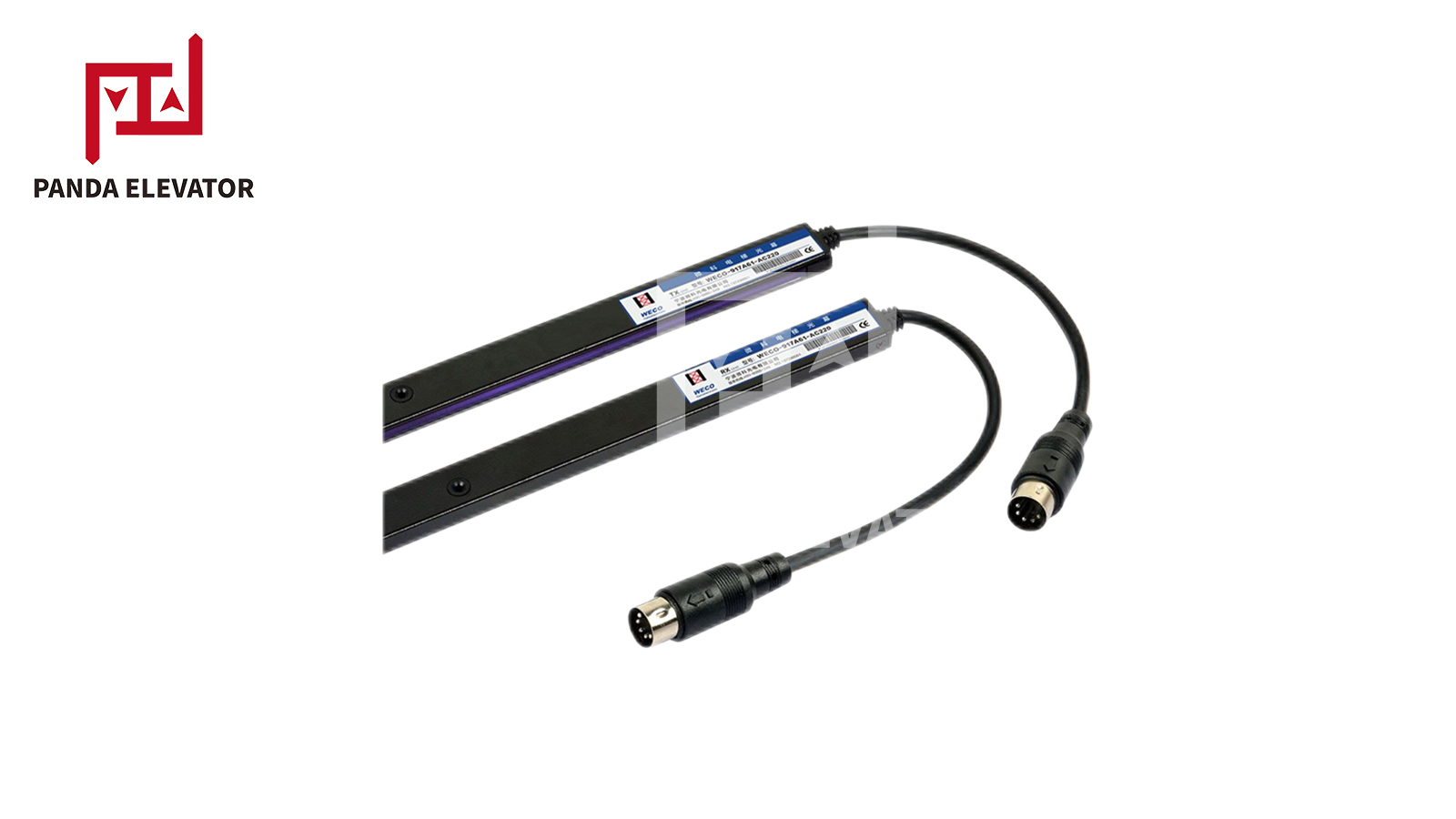
| Doors reopen before they close, at every floor | Light curtain | Weco 917A | Supply voltage, curtain thickness |
| Doors reopen at one floor only | Sill, landing mechanism, vane | — | Mechanical, not a spare part |
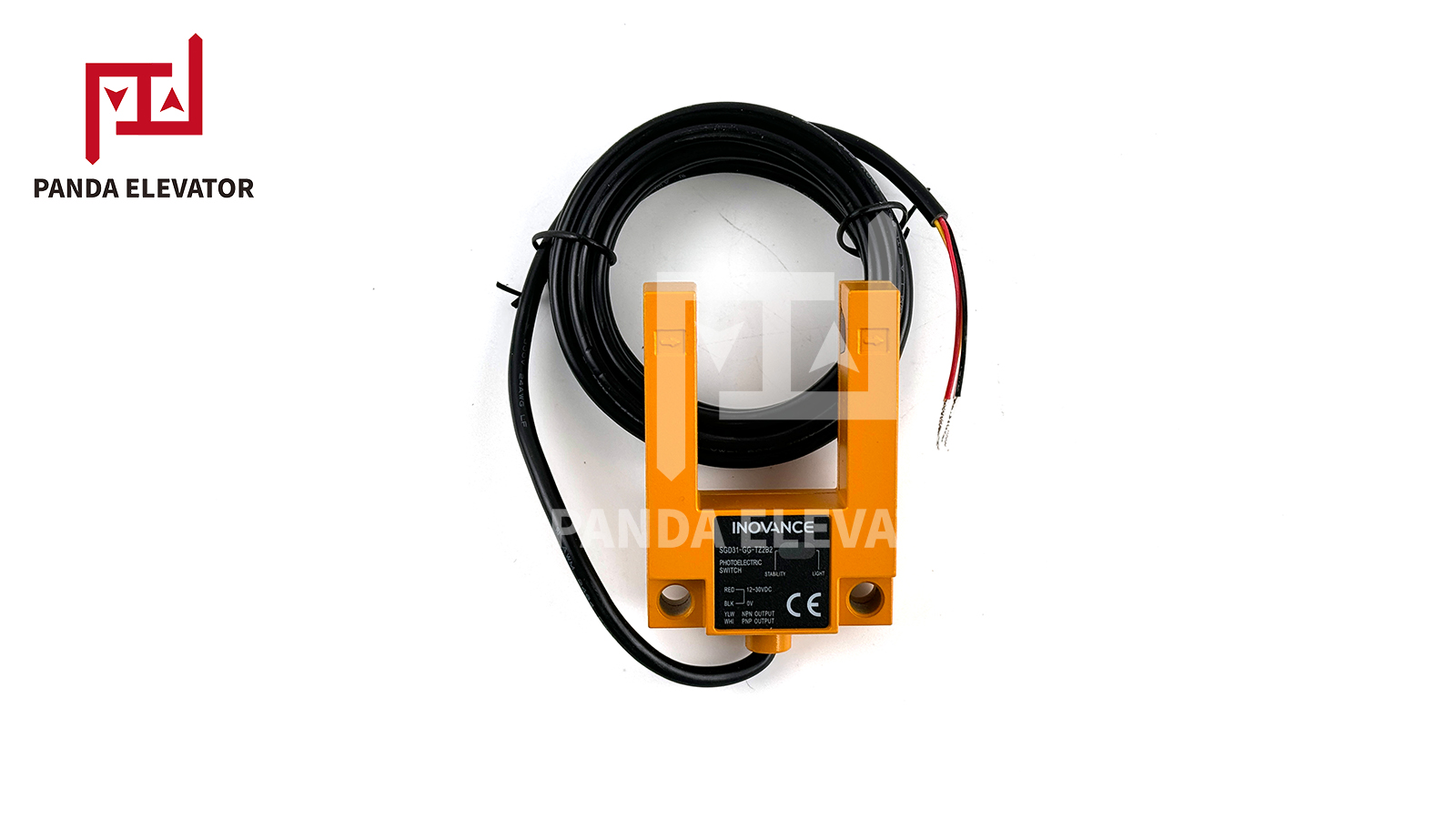
| Car stops a few centimetres off the floor | Leveling sensor | SGD31-GG-TZ2B2P | Mounting bracket, sensing distance |
| Car does not stop at the top or bottom terminal | Limit switch | S3-1370 | Roller arm direction, contact type |
| Fire recall does not operate on test | Fireman switch | MBT-FIRE-A | Box, panel or faceplate only |
Doors reopening: the light curtain
A light curtain is a pair of infrared columns across the door opening. When the beam is broken the door reopens, which is correct behaviour — the fault is that it is being broken when nothing is there.
Weco 917A: the numbers that matter
Supply voltage AC 110 V, curtain thickness 11 mm, minimum door opening ≤ 20 mm, maximum door opening ≥ 1800 mm. The thickness figure is a mounting constraint, not a specification detail: if the door pocket is 10 mm, an 11 mm curtain will not sit flush and will rub.
Why the voltage matters more than the model
A curtain wired to the wrong supply behaves intermittently before it fails outright, which reads as a mechanical door fault. Check the voltage at the door operator before ordering, and if the existing unit is unmarked, send a photo of the connector and the control board terminal.
Two curtains, not one
A standard centre-opening door uses two curtain columns, one on each leading edge. Ordering one is the single most common quantity error in this category. Multi-panel doors need a column per leading edge, so count the panels before you count the price.
When it is not the curtain
If the doors reopen at one floor only, the curtain is almost never the cause. Look at the sill, the landing vane engagement, and the door track at that floor. Replacing a curtain to fix a one-floor fault wastes a part and leaves the fault in place.
Car stopping short of the floor: the leveling sensor
Leveling sensors tell the controller where the car is relative to the floor. When one drifts or fails, the car stops consistently short or consistently past the landing — consistently is the tell, because a random stop is usually a brake or traction issue.
SGD31-GG-TZ2B2P
Brand INOVANCE, model SGD31-GG-TZ2B2P. This is a replacement-part purchase in the strict sense: it has to match the control system it talks to, so the brand and the model both matter. A visually similar sensor from another brand will fit the bracket and still not report correctly.
The bracket is the hidden variable
Sensor bodies are standardised far more than the brackets that hold them. Before ordering, photograph the installed bracket and note the gap between the sensor face and the vane. If the bracket is not available, say so — a sensor that arrives without its mount is not a repair.
Two sensors per car
Most cars use a pair, one for each direction of travel or one per side of the car frame. Replacing both at once is usually the right call when one fails, because the second is the same age and the same duty.
Car overrunning the terminal: the limit switch
The limit switch is the last mechanical guard before the final limit. It is a simple device and it fails in simple ways: a bent arm, a worn roller, or a contact that no longer opens.
S3-1370
The critical field is not the model but the roller arm direction — a switch that operates from the wrong side will mount correctly and never actuate. Send a photo of the installed switch with the arm visible, and state whether the car approaches it from above or below.
Check the cam before the switch
If the switch tests fine on the bench and still does not operate in the shaft, the cam that strikes it has moved. That is an adjustment, not a part.
Fire recall not working: the fireman box
The fireman box is the switch that takes the car out of normal service and puts it into fire recall. It is tested rarely and fails quietly, which is why it shows up on inspection lists.
MBT-FIRE-A
Supplied as box, panel or faceplate — three different order lines for the same installation. Decide which one you need before asking for a price: a faceplate will not replace a failed switch, and a full box is wasted money where only the plate is scratched.
Wiring conventions differ by market
Fire recall wiring follows local code, and the same box can be wired for different recall behaviour. Tell us the destination market and the controller family; the box is supplied to match, not adapted on site.
Elevator spare parts or system components: which page
The difference is not prestige, it is order pattern. Spare parts are bought in twos and threes against a fault; components are bought against a specification.
| You are buying | Use this page | Because |
|---|---|---|
| A part to fix a fault | This page — spare parts | Low quantity, model-level match, fault-driven selection |
| A device to a rating | Safety components | Selected by load and speed, documented, quantity per lift |
| A complete door unit | Door parts | Chosen by opening type and height, one per floor |
| A controller or panel | Control system | Compatibility with the existing controller decides the order |
What a maintenance company should keep on the shelf
For a service company running a mixed portfolio, the elevator lift spare parts that cause the most aborted callouts are the cheapest ones. Based on what our customers reorder, the short list is:
- Light curtains — one pair per common door type in the portfolio, not per lift.
- Leveling sensors — one per controller family you service, because they are not interchangeable.
- Limit switches — two or three, since arm direction varies and the wrong one is useless.
- Door rollers and hanger wear items — the parts that turn a two-hour callout into a twenty-minute one.
This list is guidance, not a stock formula. The right quantity depends on how many lifts of each type you hold under contract; we would rather you order against your actual callout history than against a generic list.
When the part number is unreadable: three fallbacks
Labels on elevator spare parts fade, get painted over, or leave with the failed unit. None of that has to stop an order. It only changes what you send.
Fallback 1: brand and function
Brand plus function narrows the range to a handful of models. "Weco light curtain" or "INOVANCE leveling sensor" is usually enough to quote a family, and a family is enough to send a comparison.
Fallback 2: dimension
Two measurements settle most mechanical spares: overall length and mounting hole spacing. For a curtain, add the thickness; for a switch, add the roller diameter.
Fallback 3: the failed unit itself
Send it. A physical sample removes the last ambiguity, and on low-value parts the freight is cheaper than a second shipment of the wrong item.
What does not work: a photo of the control panel, or the lift brand on its own. Both describe a system, not a part.
Five photographs that get the right part first time
- The whole unit in place — shows the mounting and the space around it.
- The nameplate or label — even a partial code narrows the range.
- The connector or terminal block — decides voltage and wiring.
- The bracket — the field that is never in a catalogue.
- The fault in context — the door edge, the sill, the cam. Context explains why the part failed.
Send the symptom and the photo. We will name the part, confirm the voltage and the quantity, and tell you if the elevator spare parts you have in mind are the wrong ones for the fault.
Where these spare parts sit in the catalogue
- All elevator parts — the full index.
- Elevator control system — controllers, COP, LOP, display boards.
- Elevator traction system — machines, sheaves, guide rails, compensation chains.
- Elevator safety components — governors, safety gears, buffers, guide shoes.