






This page indexes every electric elevator parts page we publish — 33 products in six groups. All of it fits a traction-driven electric elevator; we do not quote hydraulic lift packages, and we say so instead of quoting around it. If you already know the model number, the section on finding a part by number gets you there in three clicks. If you only know the specification or the fault, the sections after it narrow the range before you spend time reading a catalogue.
The electric elevator parts catalogue in six groups
Parts are grouped by where they sit on the lift, because that is how a maintenance team thinks when a car is out of service. Each group page carries the model index and the selection fields for that group.
| Group | What it covers | Models | Bought by |
|---|---|---|---|
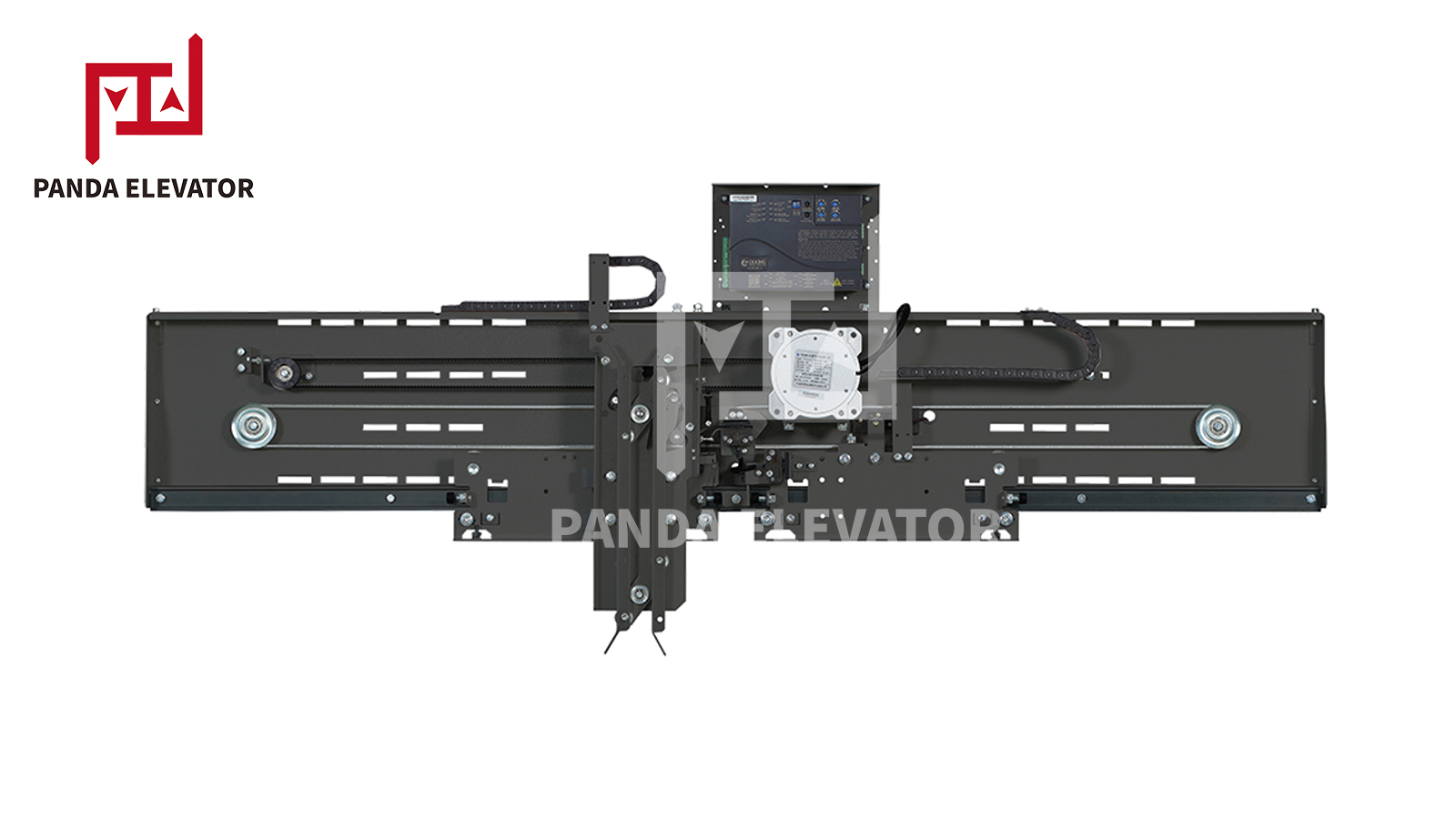
| Elevator doors parts | Car door operators, landing door mechanisms, centre and side opening | 6 | Opening type and height; one landing unit per floor |
| Safety components | Overspeed governors, safety gears, buffers, guide shoes, tension devices | 8 | Rated load (P+Q) and rated speed |
| Traction system | Traction machines, sheaves, guide rails, fishplates, compensation chains | 10 | Load, speed, roping and machine weight |
| Control system | Controllers, cabinets, COP, LOP, display boards | 5 | Controller family and protocol |
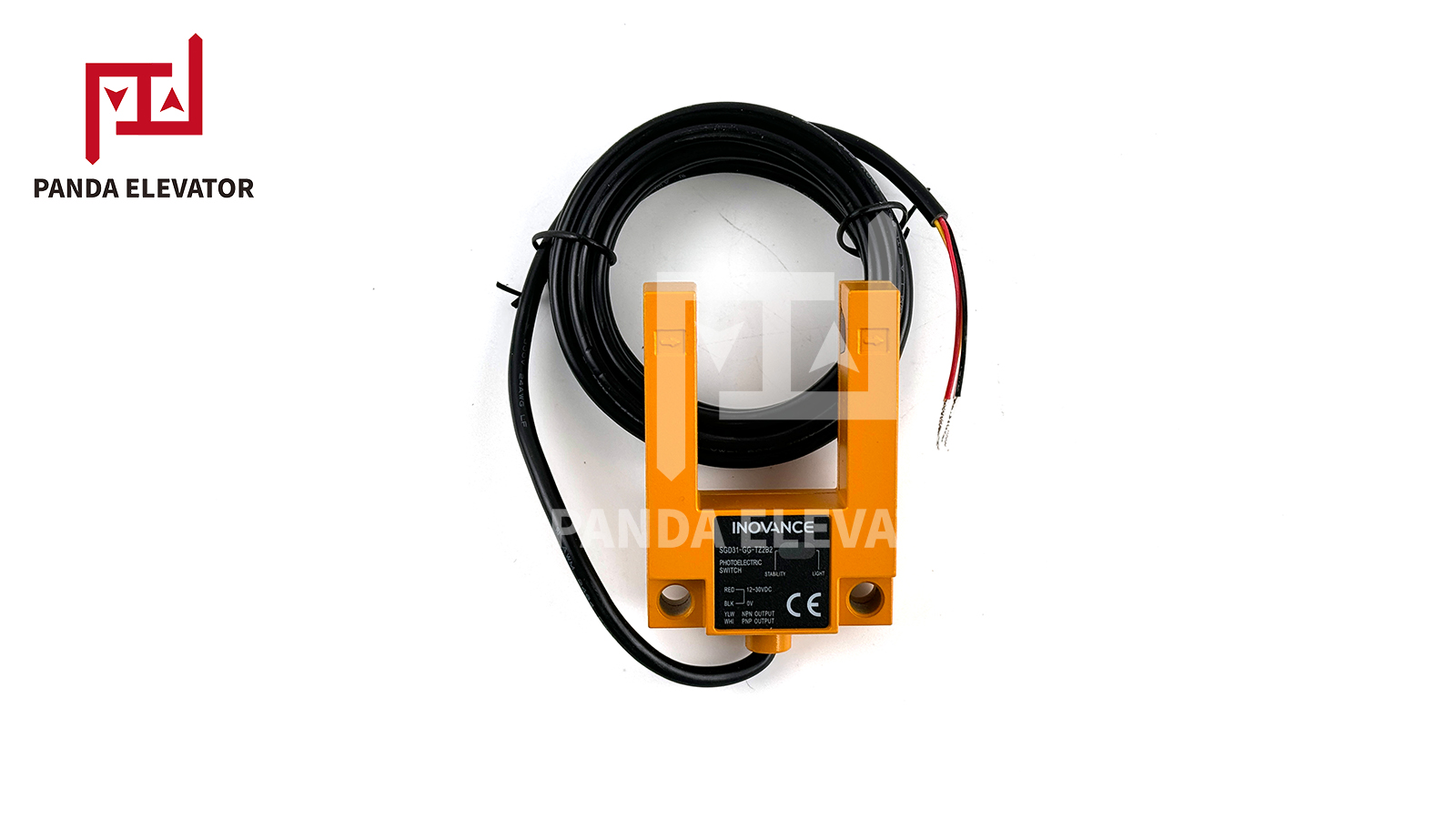
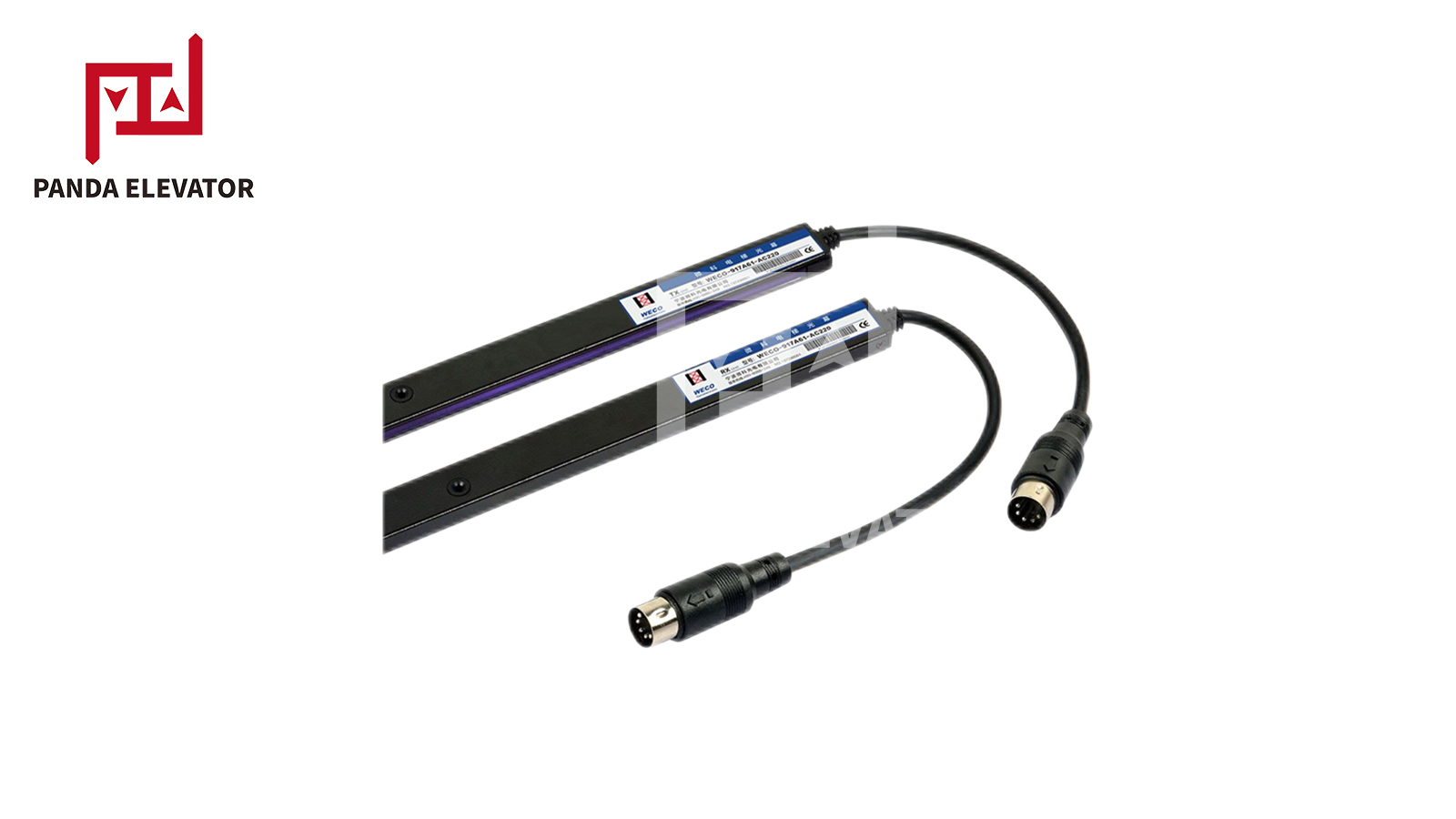
| Spare parts | Light curtains, leveling sensors, limit switches, fireman boxes | 4 | Fault symptom, then model |
| Rails and sheaves | Machined guide rails, fishplates, cast iron and nylon sheaves | 4 | Rail section and rope diameter |
Model counts are per group page, not per container. A group page listing six models covers the standard range; if your lift needs a variant outside it, say so in the enquiry — a variant is a question, not a refusal.
Three ways to find your elevator parts
Buyers arrive with one of three things: a model number, a specification, or a fault. Each has a different shortest path.
- You have a model number — use the group index. Every model we list appears on exactly one group page, with its rated values.
- You have a specification — start from load and speed. The safety and traction tables are ordered by rating, not by name.
- You have a fault — start from the symptom table on the spare parts page. It names the part from what the car does.
Finding a part by model number
Model codes are not standardised between factories, but within our range the family prefix tells you which group page to open. J and OMJ are car door operators; T and OCM are landing mechanisms; OX covers safety gears, governors, guide shoes and tension devices; YJ is a geared traction machine and MONA / MCK are gearless; MCTC and MT70 are display boards; NICE3000 is a controller family.
If the prefix is not in that list, the number may belong to a controller or a panel from another supplier — send a photo of the nameplate rather than a transcription, because one wrong digit changes the part.
Finding a part by specification
Two fields carry most of the weight. For anything that grips or stops the car, it is P+Q (empty car mass plus rated load) and rated speed. For anything that runs on the rail, it is rail width measured on the rail head. For anything driven by rope, it is rope diameter. If you have those, the model usually follows.
Finding a part by fault
Fault-first ordering is the fastest route for maintenance companies, and it is the route the spare parts page is built around: doors reopening, car stopping short, car overrunning the terminal, fire recall not operating. Each symptom maps to one device and one deciding field.
Model prefixes used in this electric elevator parts range
Reading the prefix first saves a search. These are the families we list, and what each one tells you before you open a product page.
| Prefix | Family | What it tells you immediately |
|---|---|---|
| J / OMJ | Car door operator | Powered unit on the car roof; needs opening width and panel count |
| T / OCM | Landing door mechanism | One per floor; needs opening height |
| OX | Safety devices | Governor, safety gear, guide shoe or tension device — selected by rating |
| OH | Buffer | Pit component; selected by speed and P+Q |
| YJ | Geared traction machine | 1:1 suspension; weight is the installation constraint |
| MONA / MCK | Gearless traction machine | 2:1 roping; machine room and controller must suit gearless |
| MCTC / MT70 | Display board | Controller family matters more than the display size |
| S3 / MBT / SGD | Spare parts | Fault-level items: switch, fireman box, leveling sensor |
A prefix outside this list is not an error on your side. It usually means the part belongs to a controller or panel from another supplier. Send the nameplate photo and we will tell you whether we can match it or not.
What this catalogue does and does not cover
This page lists components. That distinction matters at the enquiry stage, because it decides who answers you.
Covered here
Individual components and assemblies: door units, safety devices, machines, sheaves, rails, controllers, panels, displays, and the fault-level spare parts that go with them.
Quantities from one piece upward. Mixed model orders are normal, and a single unit is a valid first order.
Not a component order
A complete lift, a full modernisation package, or an installation project. Those are commercial projects with their own scope, and they are quoted separately from the component catalogue.
If your enquiry is project-level, say so in the first line — it will be routed to the right desk instead of being answered as a parts question.
Why we separate the two
A parts enquiry can be answered from a model number in a day. A project enquiry needs shaft dimensions, duty, code requirements and a site plan. Mixing them produces slow answers to simple questions, which is the most common complaint buyers have about component suppliers.
Cross-referencing: what to send when you only have the old part
Most buyers do not start with a clean part number. They start with a broken part, a photo, and a lift that is out of service. This table is the shortest route from that position to a reference we can quote against.
| What you have | Send this | What it lets us do |
|---|---|---|
| A readable part number | The number, and the quantity | Match the model directly, or name the closest equivalent if it is obsolete |
| A number with a missing suffix | The number plus a photo of the installed unit | The suffix is the configuration, and the photo usually identifies it |
| No number, brand known | Brand, lift model, and what the part does | Narrow to the family, then to the model by dimension |
| No number, brand unknown | Dimensioned photos: overall, mounting holes, connector | Match by geometry, which works for shoes, rollers, switches and sills |
| Only a drawing | The drawing, plus the tolerance that matters | Quote it as a made-to-drawing item with that tolerance called out |
Photos beat descriptions. "Door operator" describes a few hundred products. A photo of the mounting plate describes one family.
Five fields that make any elevator parts quotation usable
- Model or a photo of the nameplate — the plate is better than a transcription.
- Quantity — per model, and for door or landing parts, the floor count.
- The rated values that apply — P+Q and speed for safety parts; rail width for rail-mounted parts; rope diameter for sheave-driven parts.
- Destination market — decides what documentation can travel with the order.
- Whether it is a replacement or a new installation — replacements need mounting detail, new installations need design values.
Send the model number, or a photo of the nameplate. We will confirm the match, the rated values and the quantity — and tell you if the electric elevator parts you asked for are not the ones the fault needs.
Where to go next
- Elevator doors parts — six door units, four families, opening height is the deciding field.
- Elevator safety components — rated by load and speed, with the gap between models stated openly.
- Elevator traction system — geared and gearless machines, sheaves, rails, compensation chains.
- Elevator control system — controller, cabinet, COP, LOP, display boards.
- Elevator spare parts — fault-first ordering for maintenance teams.