







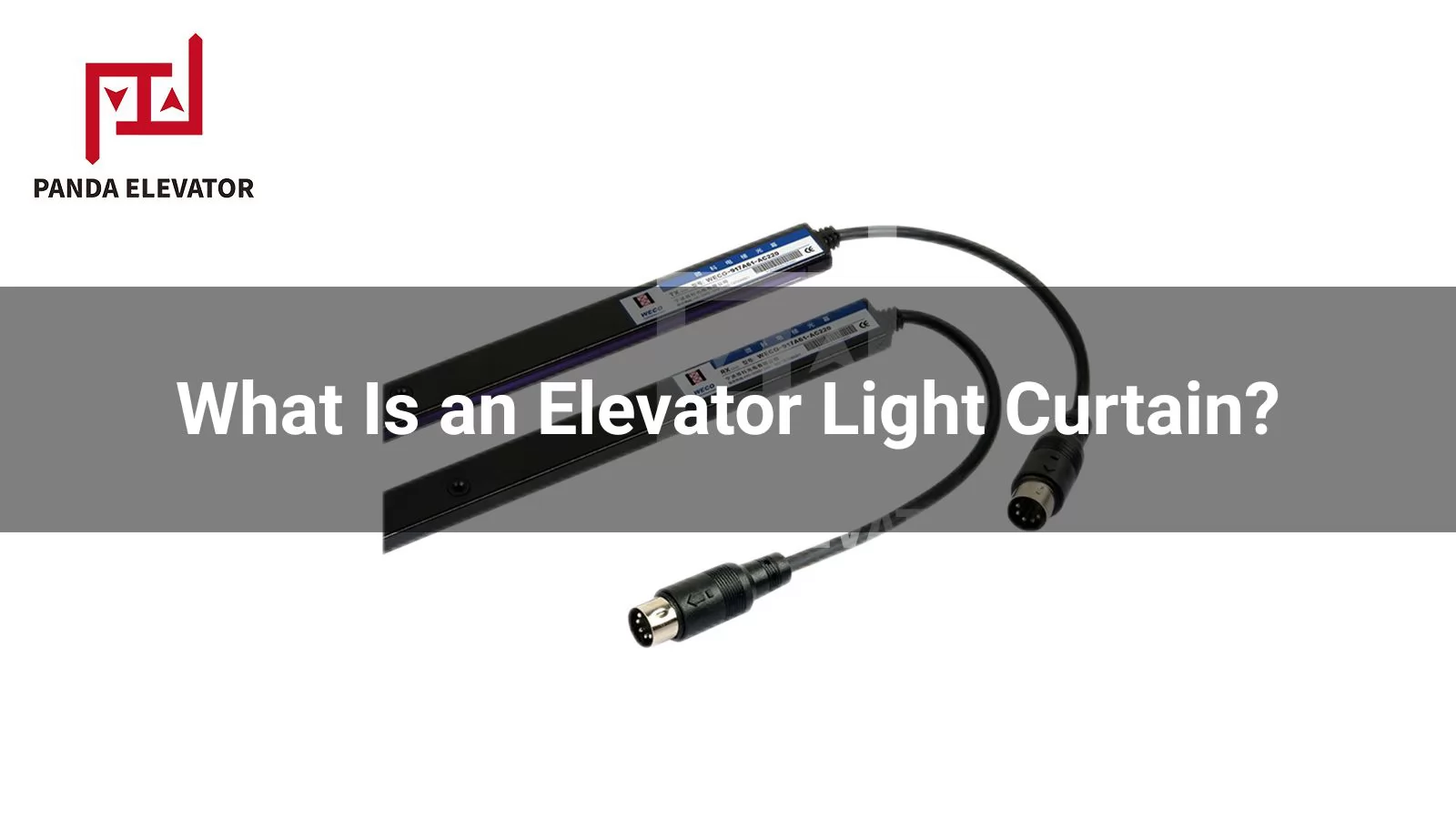
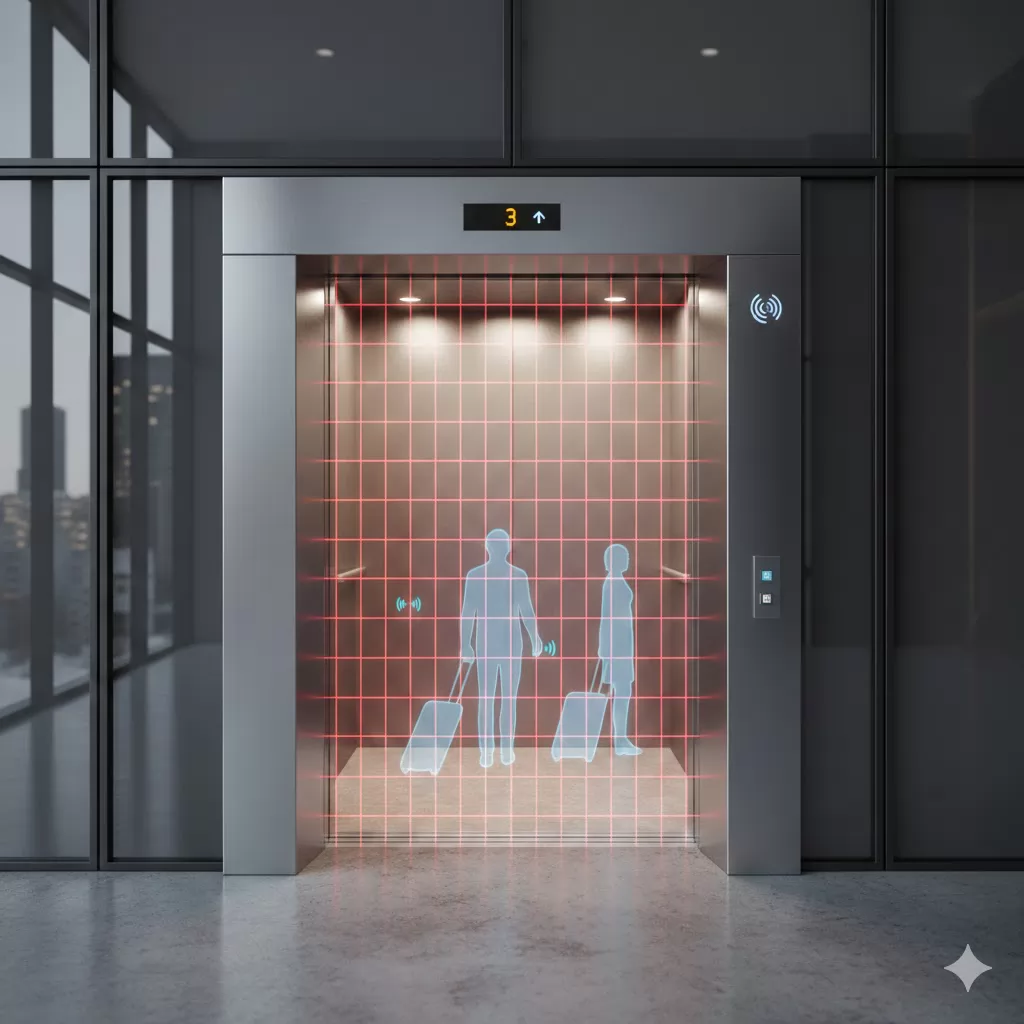
An elevator light curtain is an essential safety device installed at the entrance of an elevator car to detect passengers, luggage, wheelchairs, or any other objects passing through the doorway. Instead of relying only on traditional mechanical door protection systems, a light curtain uses a dense matrix of infrared beams to monitor the entire door opening area in real time. When any beam is interrupted, the system signals the elevator door operator to stop closing and reopen the doors to prevent accidental impact or entrapment.
Light curtains have become the standard door protection technology in modern elevators because they provide faster detection, wider coverage, and a higher level of safety compared with older door edge sensors. This technology is widely used in both residential and commercial elevator systems, helping building owners comply with international elevator safety standards while improving the overall passenger experience.
In simple terms, an elevator light curtain serves as an invisible safety barrier across the doorway, ensuring that every boarding and exiting movement is detected accurately and that the elevator doors respond immediately to protect users.
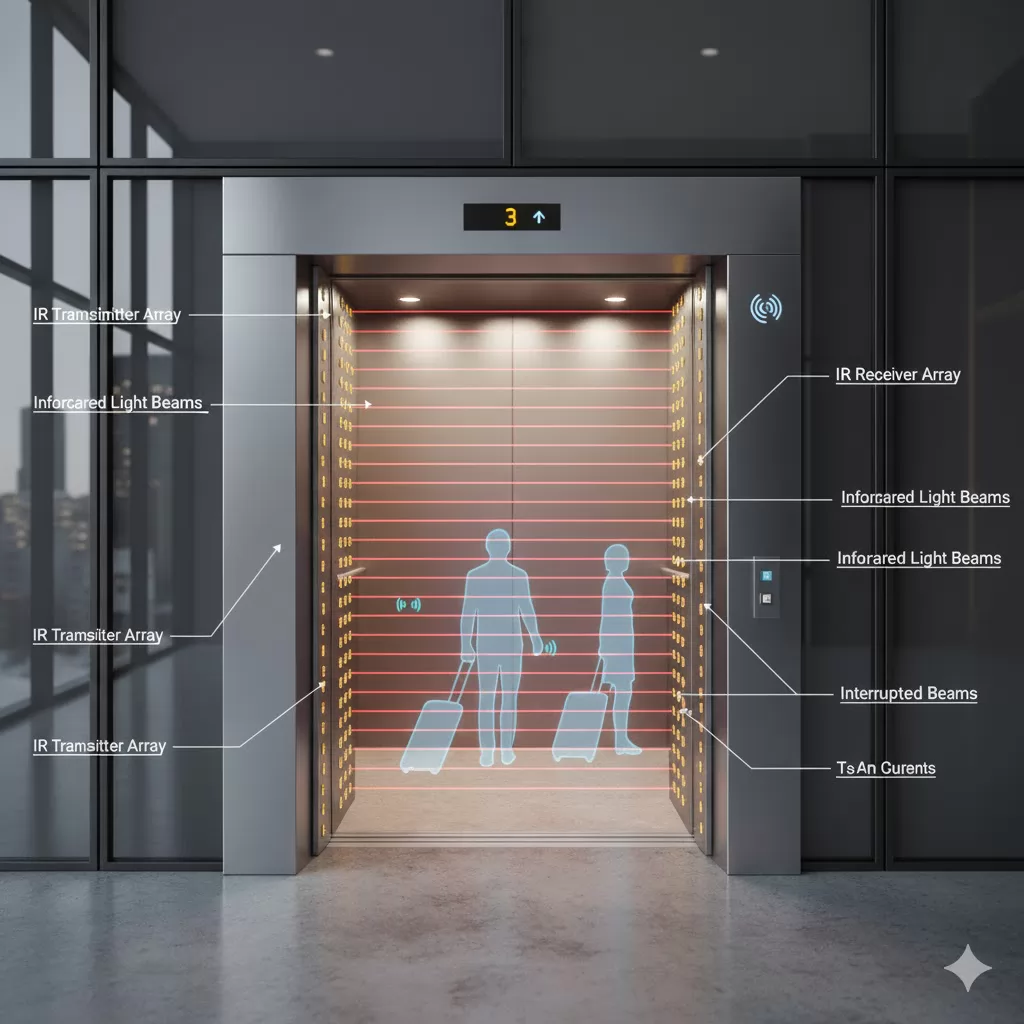
An elevator light curtain operates using a network of infrared transmitters and receivers installed along both sides of the elevator door frame. These components create a dense grid of invisible light beams that cover the entire doorway from top to bottom. When the elevator doors begin to close, the light curtain continuously scans the opening to detect any obstruction within its sensing zone.
If a person, object, or even a small item such as a bag or child’s hand breaks any of the beams, the system instantly sends a signal to the elevator door controller. The controller then either stops the door movement or reverses the closing motion to reopen the doors. This process happens within milliseconds, ensuring a rapid and reliable safety response.
Advanced elevator light curtains also incorporate self-diagnostic and fault detection features. They can monitor alignment, sensitivity, and signal output to ensure stable performance under various environmental conditions such as dust, light reflections, or vibration. In modern building environments, this level of precision and intelligence is critical to maintaining safe and efficient elevator operations.
Elevator light curtains can be classified into several categories based on their beam density, performance level, and application scenarios. The table below summarizes the most common types and their typical characteristics:
| Type | Description | Typical Applications | Key Advantages |
|---|---|---|---|
| Standard Light Curtains | Equipped with a moderate number of infrared beams to provide reliable door area detection. | Residential elevators, small offices, hotels | Cost-effective, stable performance, suitable for general usage |
| High-Density Light Curtains | Designed with a higher number of beams for enhanced accuracy and reduced blind spots. | Commercial buildings, hospitals, high-traffic facilities | Superior safety coverage, faster detection, higher sensitivity |
| Weather-Resistant & Industrial Light Curtains | Built with reinforced materials and sealing to withstand harsh environments. | Factories, warehouses, semi-outdoor elevators | Durable, reliable in dusty or humid conditions |
| Intelligent / Adaptive Light Curtains | Integrated with smart control systems for diagnostics and performance optimization. | Smart buildings, modern commercial elevators | Self-monitoring, improved maintenance efficiency, enhanced reliability |
By selecting the appropriate elevator light curtain type, building owners and maintenance providers can significantly improve both safety performance and long-term operational reliability.
Elevator light curtains play a critical role in ensuring safe and user-friendly elevator operation. Compared with traditional mechanical door protection systems, they offer enhanced precision, faster response times, and broader detection coverage. The following points summarize the main benefits and safety functions:
A high-density grid of infrared beams monitors the full height and width of the elevator doorway, reducing blind spots and minimizing the risk of impact or entrapment.
Light curtains detect obstructions instantly and trigger the door controller to stop or reverse operation, ensuring responsive passenger protection.
Passengers such as children, seniors, and wheelchair users benefit from safer and smoother boarding without the need to physically push door panels.
Modern elevator systems require door protection devices that meet global safety regulations and building codes. Light curtains support compliance with these standards.
With no moving mechanical sensing parts, elevator light curtains typically deliver longer service life and lower maintenance requirements than traditional safety edges.
Smooth door operation, fewer interruptions, and reduced door-closing force contribute to a safer and more comfortable elevator journey.
Elevator light curtains are categorized as essential safety components and must comply with relevant international elevator and electrical safety standards. These standards ensure that light curtain systems deliver stable performance, reliable detection accuracy, and consistent protection for passengers under real-world operating conditions.
Some of the commonly referenced standards and regulatory frameworks include:
High-quality elevator light curtains are rigorously tested for impact resistance, signal stability, EMI protection, and long-term durability. Compliance certification not only safeguards user safety but also supports legal and insurance requirements for building operations.
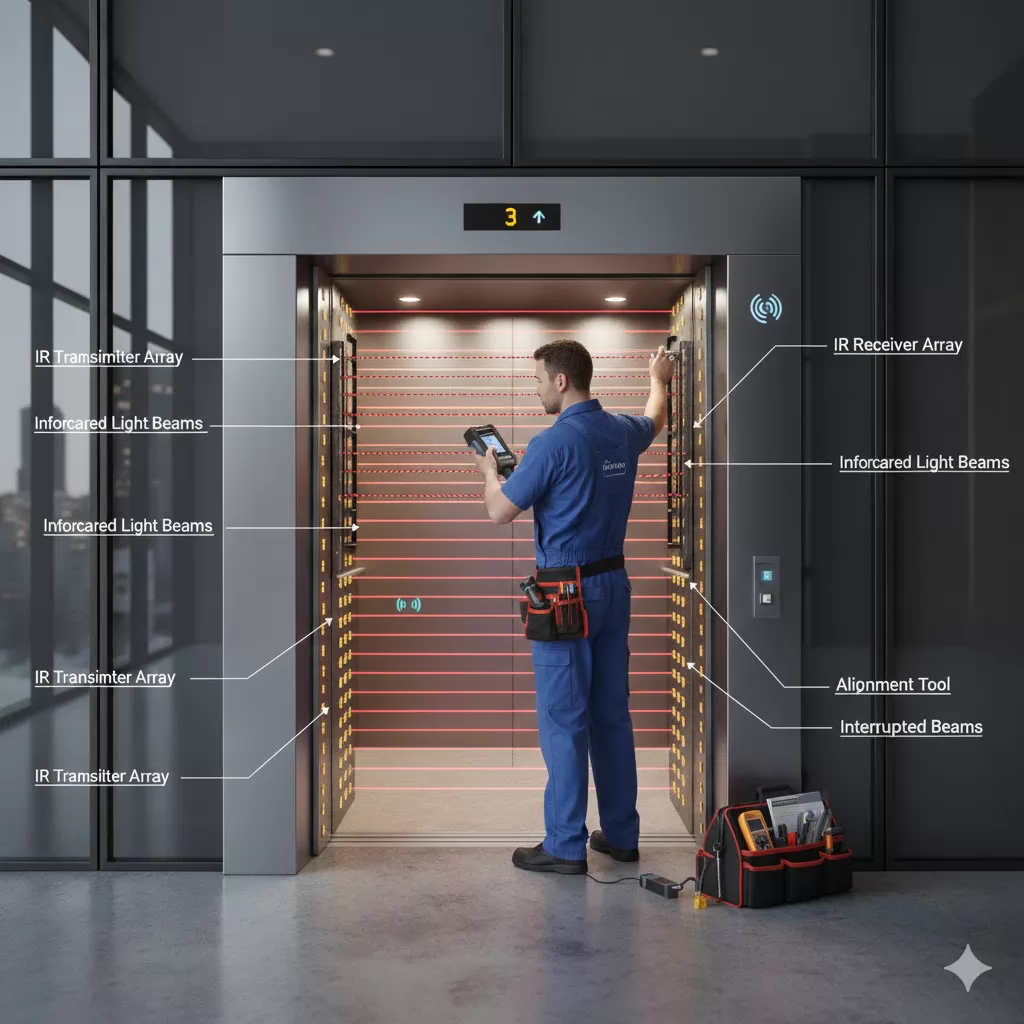
Proper installation and maintenance are essential to ensure that elevator light curtains operate safely and reliably throughout their service life. Incorrect alignment, wiring faults, or insufficient maintenance may reduce detection accuracy and compromise passenger safety. Therefore, installation should always be carried out by qualified elevator technicians in accordance with manufacturer specifications and applicable safety codes.
When installed and maintained correctly, elevator light curtains provide long-term, maintenance-efficient protection with minimal performance degradation, supporting reliable elevator operation in both new installations and modernization projects.
Elevator light curtains are now regarded as a standard safety feature in most modern elevator systems. Their ability to provide reliable, contact-free detection makes them suitable for a wide range of building environments and passenger traffic conditions. The following represent the most common application scenarios:
Because elevator light curtains significantly reduce impact risk, they have become a key component in achieving modern safety standards and improving passenger trust in elevator transportation systems.
In many regions, elevator safety regulations require the installation of an approved door protection system. Light curtains are widely recognized as a compliant solution because they provide continuous, contact-free obstruction detection. Exact legal requirements vary depending on the country and building code.
In most modern elevator systems, light curtains have replaced traditional mechanical door edge sensors. However, some systems may still combine both technologies depending on design, standards, and redundancy needs.
High-density elevator light curtains are capable of detecting smaller objects such as bags or children’s hands, although detection capability depends on beam spacing, sensitivity, and installation configuration.
Certified elevator light curtains include internal monitoring and fail-safe functions. If a fault is detected, the elevator typically defaults to a safe operating mode, which may include preventing automatic door closing until maintenance is performed.
Functional testing is normally included in routine elevator maintenance schedules. Regular inspection ensures correct alignment, signal output stability, and compliance with safety standards over time.
Elevator light curtains are a fundamental safety component in modern elevator systems, providing reliable, contact-free detection of passengers and objects in the doorway. By combining fast response times, comprehensive coverage, and compatibility with international safety standards, they significantly reduce the risk of accidents and enhance passenger confidence.
Understanding the types, working principles, installation requirements, and maintenance best practices of elevator light curtains helps building operators, technicians, and designers implement safer and more efficient elevator systems. With the ongoing development of smart and adaptive detection technologies, light curtains will continue to play a central role in improving elevator safety and overall user experience.






.png)