







Choosing the right elevator components manufacturer is important for elevator OEMs, contractors, modernization companies, maintenance providers, and distributors. The right supplier can affect equipment compatibility, installation efficiency, product reliability, and long-term maintenance costs.
The global elevator component market includes manufacturers and suppliers covering mechanical, electrical, safety, door, and control components. Some companies focus on specific parts, while others provide integrated elevator systems and a broader range of components.
This guide reviews 10 established companies associated with elevator components and parts, including their main product areas and key strengths. The list is intended to help buyers compare potential manufacturers and suppliers for OEM projects, elevator parts replacement requirements, modernization work, and ongoing maintenance.
| Manufacturer | Main Strength | Key Product Areas | Suitable For |
|---|---|---|---|
| ADAMS | Elevator doors and components | Door equipment, safety components | OEM and replacement |
| Mitsubishi Electric | Integrated elevator technology | Motors, controls, elevator systems | Large projects |
| Otis | Global elevator solutions | Controls, doors, safety systems | New installations and modernization |
| KONE | Complete elevator systems | Hoisting, doors, controls | Commercial projects |
| GAL Manufacturing | Elevator door equipment | Door operators, entrances, controls | OEM and modernization |
| Schumacher Elevator | Custom elevator solutions | Elevator systems and components | Custom projects |
| ERM Corp. | Replacement components | Mechanical and electrical parts | Maintenance and replacement |
| Mega Elevator Parts | Parts supply and distribution | Replacement elevator parts | Maintenance |
| Sanjin Elevator Parts | Elevator components and parts | Mechanical and electrical components | OEM and sourcing |
| Panda Elevator | Elevator parts and sourcing | Elevator components and spare parts | Global B2B buyers |
Elevator components are the individual mechanical, electrical, safety, and control products used to build, operate, maintain, or modernize an elevator system. Depending on the elevator design, a complete system can contain hundreds of individual components working together.
Common elevator components include guide rails, guide shoes, sheaves, safety gears, buffers, overspeed governors, door operators, door locks, control boards, push buttons, sensors, and traveling cables.
Key Industry Takeaway: The terms elevator components and elevator parts are often used interchangeably in B2B sourcing. However, "components" can refer more broadly to products that form part of an elevator system, while "parts" is also frequently used for replacement and maintenance products.
For buyers, the more important consideration is whether a company can provide the required component with the correct specifications, compatibility, quality control, documentation, and technical support.

ADAMS is an established name in the elevator industry, particularly in elevator door equipment and related components. Its product portfolio makes it relevant to OEMs, elevator contractors, modernization companies, and buyers looking for replacement components.
The company is associated with elevator door systems and equipment used in different elevator applications. Its product range can include door operators, entrances, door-related components, and safety products.
Main elevator components: Door equipment, entrances, door operators, safety-related components, and replacement parts.
Why consider ADAMS: Its long-standing focus on elevator products makes it a relevant option for buyers seeking specialized elevator components rather than general industrial parts.

Mitsubishi Electric is a global elevator and electrical technology company with extensive experience in complete elevator systems. Its elevator business covers technologies extending from traction and drive systems to controls, motors, doors, and other integrated equipment.
For large commercial and infrastructure projects, the company's major advantage is its ability to combine different elevator technologies into a complete system. This makes Mitsubishi Electric particularly relevant when component sourcing is closely connected with overall elevator system performance.
Main elevator components: Elevator motors, traction systems, control technology, drive systems, door systems, and related elevator equipment.
Why consider Mitsubishi Electric: Its integrated engineering capabilities can be valuable for large projects requiring coordinated elevator system technologies.

Otis is one of the world's best-known elevator companies and provides elevator, escalator, modernization, and maintenance solutions across international markets. Its extensive installed base also creates demand for replacement components and modernization equipment.
Rather than focusing on only one category of elevator parts, Otis operates across complete elevator systems and supporting technologies. This includes control systems, door equipment, safety technologies, and other components used in elevator installation and modernization.
Main elevator components: Controls, door systems, safety equipment, elevator machinery, and system-related components.
Why consider Otis: Its global elevator experience and broad service network make it particularly relevant for large projects, modernization programs, and customers requiring long-term technical support.

KONE is a major global elevator and escalator company serving residential, commercial, and infrastructure projects. Its elevator technology covers the major systems required for passenger and freight transportation within buildings.
The company develops solutions involving hoisting technology, elevator controls, doors, safety systems, and other equipment. Its broad product and service portfolio also makes it relevant to modernization projects where existing elevator systems need updated components or technologies.
Main elevator components: Hoisting systems, motors, controls, door equipment, safety systems, and elevator-related equipment.
Why consider KONE: Its combination of elevator engineering, modernization expertise, and global service capabilities makes it suitable for projects requiring integrated elevator solutions.

GAL Manufacturing is particularly relevant to the elevator components market because of its long-standing focus on elevator door equipment and related products. Its solutions are commonly associated with elevator modernization, replacement, and new installation applications.
The company has historically been recognized for products such as door operators, entrances, controllers, and other elevator equipment. For buyers seeking specialized entryway and door protection upgrades, engineering options offer highly compatible solutions that complement standard industrial hardware.
Main elevator components: Door operators, entrances, door equipment, controllers, and related elevator components.
Why consider GAL Manufacturing: Its specialization in elevator door and equipment solutions makes it a useful option for OEM, modernization, and replacement projects.

Schumacher Elevator Company focuses on designing, engineering, and manufacturing elevator solutions for different project requirements. Its capabilities extend from individual elevator components to customized systems, making the company relevant to both new installations and modernization projects.
Its product range includes special-purpose personnel elevator cabs, power units, control systems, hydraulic elevator controllers, cab panels, and handrails. This combination of engineering and manufacturing capabilities allows customers to source customized elevator solutions rather than relying only on standard replacement parts.
Main elevator components: Elevator cabs, power units, controllers, control systems, cab panels, and related equipment.
Why consider Schumacher: Its ability to engineer and manufacture customized elevator solutions makes it suitable for projects with specific technical, dimensional, or application requirements.

ERM Corp. is associated with elevator replacement parts and components used by elevator professionals for maintenance, repair, and modernization applications. Its position in the market makes it relevant to buyers who need compatible components for existing elevator equipment.
For replacement projects, product availability and compatibility can be just as important as the manufacturer's overall product range. Buyers often need to identify the correct part based on an existing elevator model, component specification, or application.
Main elevator components: Mechanical elevator parts, electrical components, replacement products, and related elevator equipment.
Why consider ERM: Its focus on elevator replacement requirements can make it useful for maintenance companies, contractors, and buyers looking for components for existing systems.
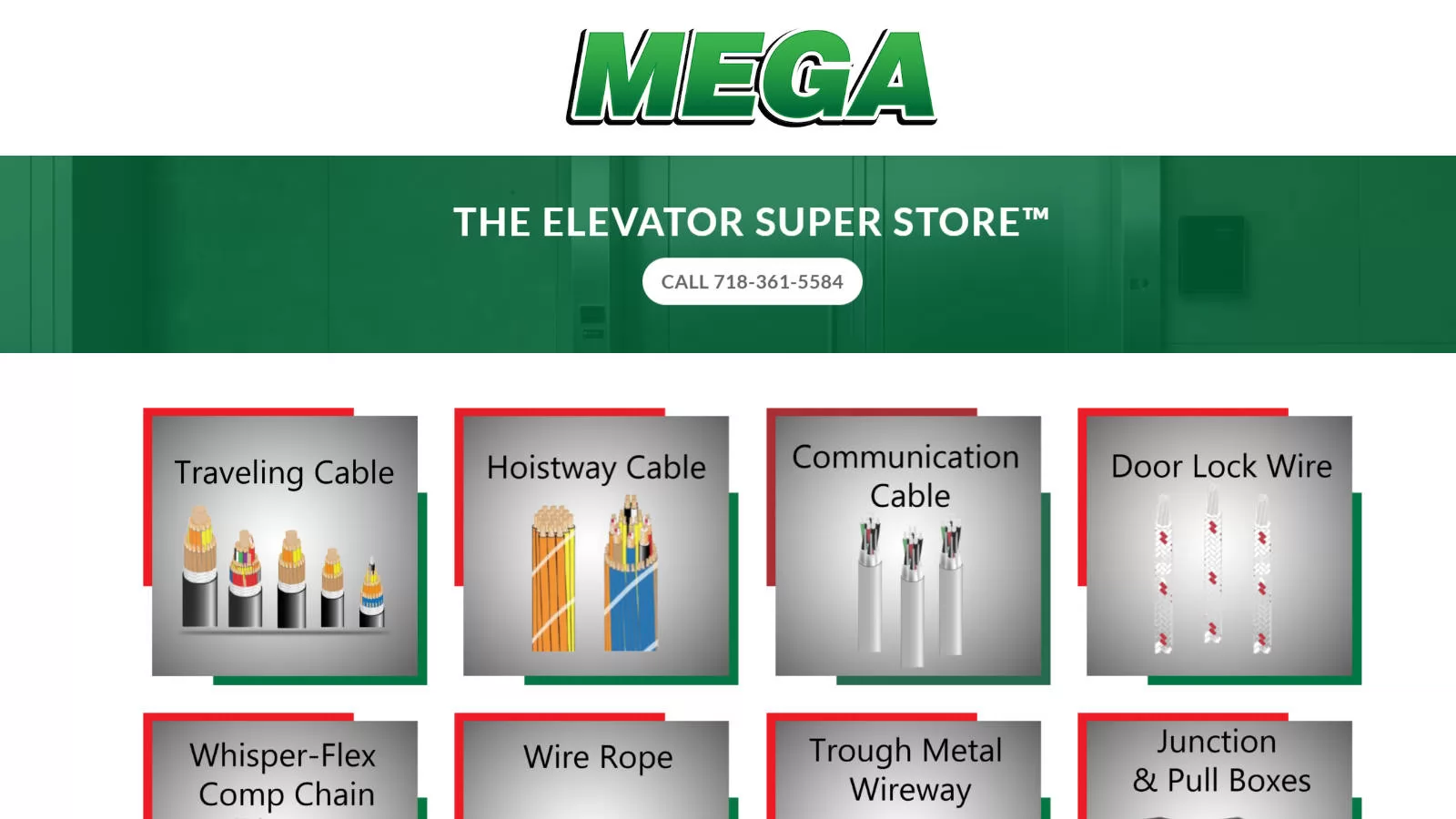
Mega Elevator Parts is more appropriately viewed as an elevator parts supplier and distributor than as a pure component manufacturer. This distinction is important for buyers comparing manufacturers with sourcing companies.
Its value lies in providing access to replacement elevator parts and supporting maintenance and modernization requirements. For service companies, distributors, and building operators, a supplier with broad product availability can simplify sourcing when components are needed for existing equipment.
Main elevator components: Replacement elevator parts, mechanical components, electrical parts, and maintenance-related products.
Why consider Mega Elevator Parts: Buyers looking for readily available replacement components may benefit from its supply and distribution model, particularly when sourcing individual parts rather than commissioning custom manufacturing.

Sanjin Elevator Parts Co., Ltd. focuses on elevator components and parts used across different elevator applications. Its product-oriented approach makes it relevant to buyers sourcing components for new equipment, maintenance, and replacement projects.
When evaluating an elevator component supplier, buyers should consider not only the number of products offered but also compatibility, product specifications, quality control, lead times, and technical communication.
Main elevator components: Mechanical elevator parts, electrical components, safety-related products, and elevator spare parts.
Why consider Sanjin: Its focus on elevator-specific products provides buyers with a specialized sourcing option when they need components rather than general industrial products.

Panda Elevator provides one-stop elevator parts and service solutions, covering elevator spare parts, doors, safety components, traction systems, control systems, and other elevator equipment. The company was established in 2019 in Suzhou, China, and exports products to more than 30 countries and regions.
Its comprehensive portfolio encompasses engineered elevator spare parts, essential elevator safety components, and complete elevator traction systems. Additional products include guide rails, fishplates, guide shoes, compensation chains, sheaves, door mechanisms, and specialized controllers.
For buyers, Panda's one-stop sourcing model can simplify procurement when several categories of elevator parts are required for the same project. The company also provides technical support and customized solutions through its sales engineering team.
Main elevator components: Guide rails, guide shoes, safety components, doors, traction machines, sheaves, control components, sensors, and elevator spare parts.
Why consider Panda: Its broad product coverage and international supply capability make it suitable for OEM sourcing, replacement projects, maintenance companies, and elevator modernization.
Elevator components can be divided into several major categories. Understanding these categories helps buyers identify the right type of manufacturer or supplier for a project.
Mechanical components include guide rails, guide shoes, sheaves, pulleys, brackets, rope attachments, and other structural or moving parts. These components affect elevator stability, movement, load handling, and long-term operating performance. For high-precision shaft alignments, heavy-duty structural options such as a machined elevator guide rail ensure optimum stability and reduced noise during travel.
Door systems are essential for passenger access and elevator safety. Common products include door operators, landing door mechanisms, car door operators, door locks, and related control equipment. The correct door component should be selected according to the elevator model, door configuration, opening method, and control system.
Safety components help protect passengers and equipment during abnormal operating conditions. Typical products include safety gears, buffers, overspeed governors, tension devices, and safety switches. For instance, high-durability rubber and hydraulic buffers, along with safety linkage devices, ensure strict compliance with global lift standards.
Electrical and control products include control cabinets, control boards, displays, sensors, push buttons, inverters, and other electronic components. Integrating an advanced elevator control system allows facilities to coordinate elevator movement, floor positioning, door operation, real-time monitoring, and passenger interfaces effortlessly.
Selecting an elevator components manufacturer requires more than comparing product prices. Buyers should evaluate several factors before placing an order:
The terms manufacturer, supplier, and distributor are often used interchangeably in elevator parts sourcing, but they describe different business models.
| Type | Main Role | Best For |
|---|---|---|
| Manufacturer | Produces components or systems | OEM and customized projects |
| Supplier | Sources and supplies products | Regular B2B procurement |
| Distributor | Stocks and resells products | Replacement and maintenance |
A manufacturer may offer greater customization, while a distributor may provide faster access to standard replacement parts. Buyers should therefore select the business model according to the project rather than assuming that one type is always better.
| Factor | What to Check |
|---|---|
| Product range | Mechanical, electrical, safety, and door components |
| Manufacturing | In-house or verified production capability |
| OEM | Custom specifications and drawings |
| Quality | Testing, documentation, and certifications |
| Supply | MOQ, lead time, and production capacity |
| Support | Technical and after-sales assistance |

Panda Elevator is positioned as a one-stop supplier for elevator parts and services, with product categories covering doors, safety components, spare parts, traction systems, and control systems. Its current catalog includes specific products such as guide rails, guide shoes, safety gears, traction machines, sheaves, sensors, and control components.
For international buyers needing a trusted partner, Panda Elevator provides streamlined international shipping, comprehensive technical assistance, customized solutions, and long-term warranty support when several elevator component categories need to be sourced through one reliable supplier.
Q1: What is an elevator components manufacturer?
An elevator components manufacturer produces mechanical, electrical, safety, door, control, or other products used in elevator systems. Some manufacturers specialize in individual components, while others provide complete elevator systems.
Q2: What are the main elevator components?
Common elevator components include guide rails, guide shoes, traction machines, sheaves, safety gears, buffers, overspeed governors, door operators, controllers, sensors, and traveling cables.
Q3: What is the difference between elevator parts and components?
The terms are often used interchangeably. "Elevator parts" frequently refers to replacement products, while "components" can describe a broader range of products integrated into an elevator system.
Q4: How do I choose an elevator components manufacturer?
Compare product compatibility, manufacturing capability, quality documentation, certifications, customization options, lead times, pricing, and technical support before selecting a supplier.
Q5: Can elevator components be customized for OEM projects?
Yes. Many manufacturers and specialized suppliers offer customized components based on technical drawings, samples, dimensions, materials, or specific elevator system requirements. Buyers should confirm customization capability before requesting a quotation.
Selecting the right elevator components manufacturer depends on the type of elevator, required components, project scale, customization requirements, and sourcing model. Large elevator companies such as Mitsubishi Electric, Otis, and KONE can be suitable for integrated systems, while specialized companies and elevator parts suppliers may be more appropriate for replacement and modernization requirements.
For buyers comparing suppliers, the most important factors are product compatibility, manufacturing or sourcing capability, quality, certifications, lead time, and technical support. A structured comparison of these factors can help reduce procurement risks and identify the right elevator components supplier for each project.