










Are you experiencing unusual noise, excessive vibration, or uneven movement in an elevator equipped with a gearless traction machine? These problems can affect passenger comfort, operating stability, and the long-term reliability of an elevator system. Although a gearless design eliminates the traditional reduction gearbox, it does not mean that the entire traction system is free from mechanical or electrical disturbances.
If the answer is yes, then identifying the actual source of the problem should be the first step. A gearless elevator traction machine works together with the drive controller, encoder, brake, traction sheave, suspension ropes, and supporting structure. A problem in any of these components may produce symptoms that appear to originate from the motor itself.
This guide examines seven potential causes of vibration, noise, and uneven operation in a gearless elevator traction machine. It also explains how to distinguish machine-related problems from wider elevator system issues, conduct a systematic inspection, and evaluate a suitable replacement machine for an elevator project.
Table of Contents
- 1. Understanding Common Gearless Elevator Traction Machine Problems
- 2. Seven Common Causes of Vibration, Noise, and Uneven Operation
- 3. How to Diagnose Gearless Traction Machine Problems
- 4. Machine Problems vs. Elevator System Problems
- 5. How to Choose a Suitable Gearless Elevator Traction Machine
- 6. Maintenance Practices for Stable Elevator Operation
- 7. Frequently Asked Questions
- Conclusion
1. Understanding Common Gearless Elevator Traction Machine Problems
A gearless elevator traction machine typically uses a permanent magnet synchronous motor (PMSM) to drive the traction sheave directly. Unlike a geared traction machine, which transmits power through a reduction gearbox, a gearless machine uses a direct-drive configuration to rotate the sheave at the required operating speed.
This configuration reduces gearbox-related mechanical components and transmission losses. However, the machine still contains rotating components, bearings, a braking system, and electrical connections that require proper installation and maintenance.

Panda Elevator MCK100 permanent magnet synchronous gearless traction machine
1.1 Three Common Operating Symptoms
Before investigating individual components, it is important to distinguish the three main symptoms that may indicate a traction system problem.
| Symptom | Typical Characteristics | Initial Investigation Focus |
|---|---|---|
| Vibration | Mechanical shaking, oscillation, or resonance during operation. | Machine mounting, bearings, rotating components, ropes, and structural support. |
| Abnormal Noise | Humming, grinding, clicking, or intermittent mechanical sounds. | Motor electromagnetic behavior, bearings, brake, and mechanical contact. |
| Uneven Operation | Jerking, inconsistent acceleration, unstable travel, or uncomfortable stopping. | Drive parameters, encoder feedback, brake coordination, and traction conditions. |
1.2 Why These Symptoms Should Not Be Treated as the Same Fault
Vibration is a physical oscillation that can be evaluated through acceleration, velocity, or displacement measurements. Noise is an audible result that may originate from mechanical or electromagnetic sources. Uneven operation describes the elevator's movement behavior and may involve both the drive system and mechanical components.
For example, a continuous humming sound may be related to electromagnetic excitation or inverter operation, while grinding sounds may suggest mechanical contact or bearing deterioration. Jerking during startup may instead involve motor torque control, encoder feedback, or brake timing.
Important: A gearless traction machine should always be evaluated as part of the complete elevator system. The presence of vibration or noise does not automatically mean that the motor needs replacement.
2. Seven Common Causes of Vibration, Noise, and Uneven Operation
Abnormal operating behavior can result from installation conditions, mechanical wear, electrical problems, or incorrect system configuration. The following seven factors provide a practical framework for investigating potential causes.
2.1 Improper Machine Installation and Mounting
The mounting foundation and supporting structure are essential to the stable operation of a gearless traction machine. An uneven base, loose fasteners, incorrect positioning, or insufficient structural rigidity may introduce vibration into the machine assembly.
Potential installation-related issues include:
- Uneven mounting surfaces or incorrect machine positioning.
- Loose or improperly secured mounting bolts.
- Misalignment between the traction sheave and rope path.
- Insufficient structural rigidity or inappropriate support arrangements.
What to check: Examine the machine foundation, mounting fasteners, alignment, and supporting structure against the manufacturer's installation drawings and requirements. Any adjustment should follow the approved installation procedure.
2.2 Traction Sheave and Suspension Rope Conditions
The traction sheave transfers driving force to the suspension ropes through friction. Its diameter, groove profile, surface condition, and compatibility with the ropes all influence traction performance.
Problems may occur when:
- Traction sheave grooves show uneven wear or surface damage.
- Suspension ropes have unequal tension.
- Rope diameter and groove configuration are incompatible.
- Rope alignment deviates from the approved installation arrangement.
- Rope condition or traction characteristics deteriorate.
These conditions may contribute to irregular rope movement, abnormal noise, vibration, or traction-related problems.

MCK100 gearless traction machine dimensional drawing
What to check: Inspect the traction sheave groove profile, rope condition, tension balance, and alignment according to the elevator manufacturer's specifications. Rope and sheave compatibility should be verified together rather than by diameter alone.
2.3 Bearing Wear and Rotating Component Problems
Bearings support rotating components and help maintain stable motor operation. Bearing wear, contamination, inadequate lubrication where applicable, or internal damage can increase friction and produce abnormal operating noise.
Typical warning signs include:
- Continuous rumbling, grinding, or rough-running sounds.
- Vibration that changes with rotational speed.
- Unusual temperature increases around bearing areas.
- Changes in mechanical noise compared with previous inspections.
What to check: Qualified technicians can evaluate bearing condition using vibration analysis, temperature monitoring, and manufacturer-approved inspection methods. Lubrication and bearing replacement requirements must follow the specific machine design.
2.4 Brake Clearance and Brake Release Problems
The braking system holds the elevator stationary and supports controlled stopping. If the brake does not release or engage correctly, mechanical resistance or inconsistent braking behavior may occur.
Possible problems include:
- Incomplete or inconsistent brake release.
- Incorrect coordination between motor torque establishment and brake release.
- Brake friction surface wear or contamination.
- Incorrect brake clearance or adjustment.
- Electrical supply or control signal problems affecting brake operation.
What to check: Inspect brake operation, specified air gap or clearance, electrical signals, and timing according to the traction machine manufacturer's documentation. Brake adjustments and testing are safety-critical tasks and must only be performed by authorized elevator professionals.
2.5 Inverter Settings and Motor Control Parameters
A gearless traction machine depends on its drive controller to regulate motor torque, speed, acceleration, and deceleration. Incorrect motor identification or unsuitable control parameters may cause unstable operation.
Important control factors include:
- Acceleration and deceleration profiles.
- Speed-loop and current-loop tuning.
- Motor electrical parameter configuration.
- Torque compensation and load-related settings.
- Brake release and engagement sequence coordination.
For permanent magnet synchronous motors, the controller must be configured for the correct motor characteristics. Incorrect parameters may lead to torque fluctuations, speed instability, or startup disturbances.
What to check: Verify motor and inverter compatibility, parameter settings, fault records, and feedback signals. Parameter adjustments should only be performed by qualified personnel following the controller manufacturer's procedures.
2.6 Encoder Feedback and Electrical Supply Issues
An encoder provides position or speed feedback to the motor control system. Depending on the machine configuration, it may use incremental or absolute feedback. Incorrect installation, damaged wiring, poor connections, or electrical interference can affect feedback accuracy.
Potential symptoms include:
- Unstable speed or position feedback.
- Inconsistent motor startup and stopping behavior.
- Unexpected drive alarms or encoder-related fault codes.
- Intermittent changes in elevator movement.
Electrical supply conditions should also be considered. Voltage imbalance, poor grounding, loose terminals, or electromagnetic interference may affect the operation of the drive system.
What to check: Examine encoder wiring, connectors, signal quality, shielding, grounding, and electrical supply conditions according to the system documentation. Electrical testing must be carried out by qualified personnel using appropriate safety procedures.
2.7 Structural Resonance and Other Elevator Components
Not every vibration originates from the traction machine. The machine support, building structure, guide rails, and other moving components may transmit or amplify vibration during elevator operation.
Other potential sources include:
- Guide rail alignment and rail joint conditions.
- Car and counterweight guide shoes or roller assemblies.
- Suspension rope and compensation components.
- Machine support frames and surrounding structural elements.
- Mechanical contact or resonance within the elevator shaft.
For example, vibration that occurs mainly at certain shaft positions may be related to guide rail conditions or another traveling component rather than the traction motor. Structural resonance can also amplify otherwise minor mechanical excitation.
What to check: Compare vibration measurements at the machine, supporting structure, and relevant locations along the elevator travel path. The purpose is to identify where the disturbance originates and how it is transmitted.
3. How to Diagnose Gearless Traction Machine Problems
Effective troubleshooting should follow a systematic process rather than relying on a single symptom. The objective is to identify the source of abnormal behavior, determine whether it originates from the traction machine or another elevator component, and select an appropriate corrective action.
Step 1: Record the Operating Conditions
Begin by documenting when the problem occurs. The operating stage, travel direction, load condition, and frequency of the symptom can provide useful diagnostic information.
| Operating Stage | Possible Investigation Areas |
|---|---|
| Startup | Brake release sequence, motor torque establishment, encoder feedback, and drive configuration. |
| Acceleration | Drive tuning, motor response, rope traction, and mechanical resistance. |
| Constant-Speed Travel | Bearing condition, rotating components, rope interaction, and structural resonance. |
| Deceleration | Speed control, brake coordination, and mechanical resistance. |
| Leveling and Stopping | Low-speed control, encoder accuracy, brake timing, and leveling settings. |
Step 2: Inspect the Mechanical Installation
Examine the machine mounting structure, fasteners, traction sheave, suspension ropes, and relevant rotating components. Look for looseness, uneven wear, misalignment, abnormal contact, or visible damage.
Compare the actual installation with the approved machine drawings and elevator system specifications. Any dimensional or alignment deviations should be evaluated before corrective work begins.
Step 3: Review Electrical and Drive System Information
Check controller fault records, motor parameters, encoder signals, and electrical connections. Confirm whether the drive configuration matches the installed motor and its rated specifications.
Where necessary, qualified technicians can use diagnostic instruments to examine current behavior, speed feedback, voltage conditions, and vibration characteristics.
Step 4: Measure and Compare Operating Performance
Where appropriate, compare current measurements with previous inspection records or manufacturer-defined acceptance criteria. This helps determine whether the abnormal condition is new, intermittent, or progressively worsening.
Useful monitoring information may include:
- Vibration amplitude and frequency.
- Motor and bearing temperature.
- Drive current and speed feedback.
- Brake operating sequence.
- Changes in sound during different travel stages.
Step 5: Identify the Root Cause Before Repair
After collecting the relevant evidence, determine whether the issue is related to the traction machine, drive controller, installation, or another elevator component.
Corrective measures should address the confirmed cause. Replacing the traction machine without checking the controller, suspension ropes, brake, and supporting structure may fail to resolve the original problem.
Safety reminder: Elevator troubleshooting involves rotating machinery, electrical systems, suspended loads, and safety devices. Inspection, testing, adjustment, and repair must be conducted by qualified personnel under applicable isolation and elevator safety procedures. Never bypass safety circuits or operate an elevator with a suspected safety-critical fault.
4. Machine Problems vs. Elevator System Problems
One of the most important troubleshooting decisions is distinguishing a traction machine fault from a wider elevator system issue. Since the motor, ropes, brake, controller, and supporting structure work together, similar symptoms can appear even when the traction machine itself is operating normally.
The following table provides a practical reference for organizing the inspection process. These are possible causes rather than definitive fault diagnoses.
| Observed Symptom | Possible Machine-Related Cause | Possible System-Related Cause |
|---|---|---|
| Continuous humming | Electromagnetic excitation or motor-related noise. | Inverter switching characteristics or electrical interference. |
| Grinding sound | Bearing deterioration or rotating component contact. | Brake friction or another mechanical contact point. |
| Vibration during travel | Machine mounting, bearing, or rotating component problems. | Guide rails, ropes, guide shoes, or structural resonance. |
| Jerking during startup | Motor torque response or brake-related mechanical resistance. | Inverter settings, encoder feedback, or control coordination. |
| Uneven stopping | Brake or motor response problems. | Leveling control, speed feedback, or system parameter settings. |
| Noise at specific shaft positions | Vibration transmitted through the machine structure. | Guide rail joints, shaft components, or local mechanical interference. |
Why Is This Distinction Important?
Replacing a traction machine is a significant technical and financial decision. If the actual problem comes from a guide rail, suspension rope, inverter, brake control system, or machine foundation, installing a new machine may not eliminate the symptoms.
For elevator modernization projects, a complete compatibility review is particularly important. The replacement machine should match the elevator's rated load requirements, speed, roping arrangement, traction sheave, electrical configuration, and installation conditions.
To understand how the traction machine works with other components, explore Panda Elevator's Elevator Traction System product category.
5. How to Choose a Suitable Gearless Elevator Traction Machine
If troubleshooting confirms that a replacement machine is necessary, selection should be based on the complete elevator configuration rather than rated power or machine dimensions alone. A suitable gearless elevator traction machine must meet the mechanical, electrical, and operating requirements of the intended application.
5.1 Confirm the Elevator Load and Rated Speed
Load and speed are two primary selection parameters. The machine must provide the required torque and operating capability under the specified elevator duty.
Before comparing models, confirm:
- Elevator rated load and car capacity.
- Rated running speed.
- Car and counterweight mass.
- Travel height and operating requirements.
- Passenger or freight elevator application.
- Expected operating frequency and duty conditions.
It is important to distinguish the machine's published load range from the elevator's rated passenger capacity. The final machine selection must account for the complete load balance, suspension arrangement, and engineering calculations.
5.2 Check the Roping Ratio and Traction Sheave
The roping ratio determines the relationship between traction sheave rope travel and elevator car movement. A 2:1 arrangement means the car travels half the distance of the rope movement, while a 1:1 arrangement has a direct relationship between rope travel and car movement.
The traction sheave diameter and groove configuration must also match the suspension rope arrangement. A machine with the correct load and speed range may still be unsuitable if its sheave and rope specifications do not match the existing installation.
5.3 Verify Motor and Controller Compatibility
Permanent magnet gearless motors require a compatible drive controller and correctly configured motor parameters.
Important electrical specifications include:
- Rated voltage and current.
- Rated power and torque.
- Rated rotational speed and frequency.
- Encoder type and feedback configuration.
- Brake voltage and electrical requirements.
- Controller compatibility and motor control settings.
When replacing an existing machine, confirm whether the current controller can support the new motor or whether controller replacement or reconfiguration is required.
5.4 Evaluate Installation Space and Machine Weight
Machine dimensions, mounting position, foundation requirements, and lifting arrangements are especially important for modernization projects and machine-room-less elevator installations.
A compact machine may simplify installation in restricted spaces, but the available mounting area, structural load capacity, rope routing, and maintenance access must still be checked.
5.5 Compare Panda Elevator Gearless Traction Machine Models
Panda Elevator lists different gearless traction machine configurations for elevator projects. Two available models are MCK100 and MONA200. Both use permanent magnet synchronous technology and have a published 2:1 roping configuration.
MCK100 Gearless Traction Machine
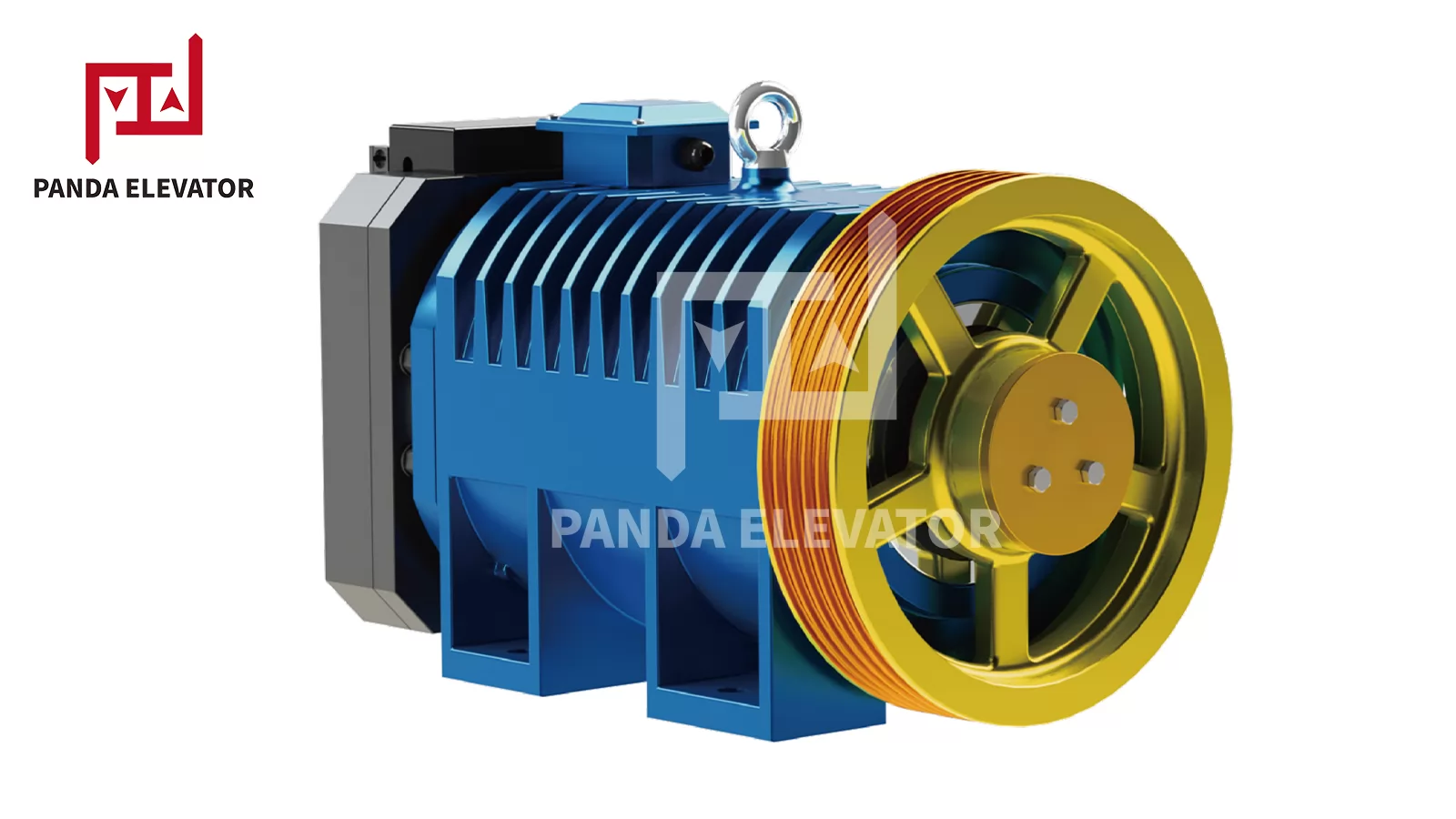
MONA200 Gearless Traction Machine
| Specification | MCK100 | MONA200 |
|---|---|---|
| Machine Type | Gearless Traction Machine | Gearless Traction Machine |
| Motor Technology | Permanent Magnet Synchronous | Permanent Magnet Synchronous |
| Published Load Range | 320–1000 kg | 450–630 kg |
| Published Speed Range | 1.0–1.75 m/s | 1.0–1.75 m/s |
| Roping Ratio | 2:1 | 2:1 |
| Sheave Diameter | Φ320 mm | Φ320 mm |
| Voltage | 380 V | 220 V / 380 V |
| Machine Weight | 210 kg | 185 kg |
| MOQ | 1 pc | 1 pc |
| Warranty | 1 year | 1 year |
Source: Panda Elevator's published product specifications. Values should be reconfirmed against the latest model-specific technical documentation before ordering.
Which Model Should You Consider?
MCK100: The published load range is 320–1000 kg, with a listed voltage of 380 V and a machine weight of 210 kg. Its broader published load range makes it a potential option for projects requiring different elevator capacity configurations.
MONA200: The published load range is 450–630 kg, with voltage options of 220 V and 380 V. Its listed machine weight is 185 kg, which is lower than the MCK100 specification. This may be relevant when machine mass is an important installation consideration.
These differences provide a starting point for model comparison, but they do not establish that either machine is automatically suitable for a particular elevator. The detailed specification tables list different current, power, rotational speed, and torque values for different load and speed combinations.
For this reason, the exact configuration should be selected based on the project requirements rather than using one general specification for every operating condition.
View the full product specifications:
Procurement tip: When requesting a quotation, provide the existing machine nameplate, rated load, speed, roping ratio, traction sheave and rope specifications, voltage, controller information, and installation dimensions. These details help the supplier evaluate compatibility before confirming a replacement model.
6. Maintenance Practices for Stable Elevator Operation
Preventive maintenance helps identify developing problems before they affect elevator performance. Although gearless traction machines eliminate traditional gearbox-related maintenance requirements, their bearings, brakes, electrical connections, traction sheaves, and associated components still require appropriate inspection.
6.1 Follow the Manufacturer's Inspection Requirements
Maintenance intervals should follow the traction machine manufacturer's instructions, the elevator maintenance plan, applicable regulations, and actual operating conditions. A universal inspection interval should not be assumed for every installation.
Important inspection areas include:
- Machine mounting and fastening conditions.
- Bearing temperature, vibration, and operating noise.
- Brake condition and release operation.
- Traction sheave surface and groove wear.
- Suspension rope condition and tension balance.
- Motor wiring, encoder connections, and electrical terminals.
- Drive controller fault records and operating parameters.
6.2 Monitor Changes in Operating Performance
Comparing current operating data with previous inspection records can help identify gradual changes. An increase in vibration, a change in operating sound, or an unusual temperature variation may indicate a condition requiring further investigation.
Where appropriate, maintenance teams can use vibration analyzers, thermal measurement equipment, and electrical diagnostic instruments to support condition monitoring.
6.3 Maintain Accurate Service Records
Detailed maintenance records make it easier to track recurring problems, identify developing faults, and evaluate component condition over time.
Useful records include:
- Inspection dates and operating conditions.
- Reported abnormal noise or vibration.
- Relevant fault codes and controller records.
- Measured vibration and temperature values.
- Component replacement and adjustment history.
- Technician observations and corrective actions.
6.4 Use Compatible Replacement Components
When a component reaches the end of its service life, replacement parts should match the original design and approved technical requirements. This is particularly important for brakes, encoders, bearings, traction sheaves, and electrical components.
Using incompatible parts or modifying the original configuration without engineering approval may affect elevator reliability and safety.
For projects requiring traction machines and related elevator components, explore Panda Elevator's Elevator Traction System product range.
7. Frequently Asked Questions
7.1 Why does a gearless elevator traction machine make noise?
Noise may originate from electromagnetic excitation, bearing deterioration, brake friction, traction sheave and rope interaction, inverter operation, or structural resonance. The operating stage and sound characteristics should be recorded to help identify the source. A gearless design eliminates the traditional gearbox but does not eliminate all mechanical and electrical noise.
7.2 What causes vibration in a gearless elevator motor?
Common potential causes include improper machine mounting, bearing problems, rotating component imbalance, traction sheave wear, rope tension imbalance, incorrect drive parameters, and structural resonance. The complete elevator system should be inspected before concluding that the motor is defective.
7.3 Can an inverter cause uneven elevator operation?
Yes. Incorrect motor identification, unsuitable acceleration or deceleration settings, speed-loop tuning problems, and encoder feedback errors can affect elevator movement. The inverter must be correctly configured for the specific permanent magnet synchronous motor and elevator control system.
7.4 Does a gearless traction machine require regular maintenance?
Yes. Gearless traction machines do not require traditional gearbox oil servicing, but they still need appropriate inspection of bearings, brakes, electrical connections, traction sheaves, and other related components. Maintenance should follow the manufacturer's instructions and applicable elevator regulations.
7.5 How can I choose a replacement gearless elevator traction machine?
Confirm the elevator load requirements, rated speed, roping ratio, traction sheave diameter, groove configuration, motor voltage, current, torque, controller compatibility, brake configuration, and installation dimensions. Compare the replacement machine's technical documentation with the original elevator design before ordering.
7.6 What is the difference between MCK100 and MONA200?
According to Panda Elevator's published specifications, MCK100 has a load range of 320–1000 kg and a listed voltage of 380 V. MONA200 has a load range of 450–630 kg and is listed for 220 V or 380 V. Both have a 2:1 roping ratio, a Φ320 mm sheave, and a speed range of 1.0–1.75 m/s. Their published machine weights are 210 kg and 185 kg, respectively.
7.7 Can replacing the traction machine eliminate elevator vibration?
Not necessarily. If vibration originates from guide rails, suspension ropes, the brake system, inverter settings, or the machine foundation, replacing the motor alone may not solve the problem. A complete diagnosis is necessary before selecting replacement components.
Conclusion
Vibration, noise, and uneven operation in a gearless elevator traction machine can result from a combination of mechanical, electrical, and installation-related factors. Although permanent magnet gearless technology reduces gearbox-related mechanical complexity and transmission losses, stable operation still depends on correct installation, compatible drive control, proper braking, and well-maintained traction components.
A systematic troubleshooting process helps elevator professionals distinguish machine-related faults from wider system problems. When replacement is necessary, evaluating load requirements, speed, roping ratio, sheave dimensions, electrical compatibility, and installation conditions is essential to selecting suitable equipment.
Panda Elevator offers gearless traction machine options such as the MCK100 and MONA200, together with a wider range of elevator traction system components. For elevator manufacturers, contractors, and maintenance companies sourcing traction solutions, reviewing technical specifications and confirming project requirements can help support a more reliable equipment selection.
Explore Panda Elevator's elevator traction system or contact the team to discuss your project requirements.