










_1794965564_WNo_1600d900.webp)
Elevator system components work together to transport passengers and goods safely and efficiently between floors. From traction machines and elevator controllers to guide rails, operating panels, door systems, and safety devices, every component performs a specific function within the complete elevator installation. Understanding these parts helps elevator contractors, maintenance companies, building operators, and equipment buyers identify suitable products and make more informed purchasing decisions.
Choosing compatible elevator parts is essential for reliable operation, easier maintenance, and long-term equipment performance. Whether a project involves a new installation, routine maintenance, or replacement of existing components, buyers need to understand how the main assemblies work together and which technical specifications affect compatibility. This guide explains the major elevator components, compares traction and hydraulic systems, and outlines practical considerations for sourcing replacement parts.
- What Are the Main Elevator System Components?
- Elevator Components and Their Functions
- Main Components of a Traction Elevator System
- Main Components of a Hydraulic Elevator System
- Elevator Control System Components
- Elevator Door System Components
- Elevator Safety Components
- Electrical and Operating Components
- How Do Elevator Components Work Together?
- How to Select the Right Elevator Components
- Elevator Component Maintenance and Replacement
- FAQs About Elevator System Components
- Conclusion
1. What Are the Main Elevator System Components?
An elevator is a coordinated mechanical and electrical system designed to transport people or materials vertically. Its components can be grouped according to their primary functions: lifting and driving, guiding, controlling, providing access, and protecting passengers.
For a conventional traction elevator, the main assemblies include a traction machine, controller, elevator car, counterweight, suspension ropes or belts, guide rails, door equipment, and safety devices. A hydraulic elevator uses a hydraulic power unit and cylinder arrangement instead of a conventional traction machine and counterweight configuration.
| Component Group | Main Parts | Primary Function |
|---|---|---|
| Drive system | Traction machine, motor, sheave, brake | Provides the force required to move the elevator car. |
| Suspension system | Ropes or belts, counterweight, terminations | Supports and balances the moving car in traction elevators. |
| Guiding system | Guide rails, guide shoes, brackets | Keeps the car and counterweight aligned during travel. |
| Control system | Controller, drive, sensors, control panels | Coordinates movement, floor selection, leveling, and operation. |
| Door system | Door operator, door panels, locks, protective sensors | Controls passenger access and protects door openings. |
| Safety system | Governor, safety gear, buffers, interlocks | Helps protect passengers and equipment under abnormal conditions. |
| Operating equipment | COP, LOP, indicators, buttons | Allows passengers to request floors and interact with the elevator. |
The component groups are interconnected. For example, the controller receives signals from the operating panels and sensors, then coordinates the drive and door systems. Safety devices monitor specific operating conditions and help prevent unsafe movement or access.
2. Elevator Components and Their Functions
Although elevator designs vary, most systems use several fundamental components. Understanding the function of each part helps buyers identify the correct product category and determine which specifications need to be checked before ordering.
2.1 Traction Machine
The traction machine provides the mechanical power that moves a traction elevator. It typically includes an electric motor and a traction sheave. The sheave drives the suspension ropes or belts, moving the elevator car and counterweight in opposite directions.
Traction machines may be geared or gearless. Geared machines use a gearbox between the motor and the sheave, while gearless machines connect the motor more directly to the sheave. The appropriate design depends on factors such as rated speed, load, building height, machine-room arrangement, and energy requirements.
2.2 Elevator Controller
The elevator controller acts as the system's central control unit. It receives signals from floor buttons, car operating panels, sensors, door circuits, and other devices. Based on the operating logic and safety conditions, it coordinates acceleration, travel, deceleration, leveling, and door operation.
An elevator controller may be supplied as a control cabinet or an integrated control unit. Compatibility with the motor, drive, encoder, safety circuit, and elevator configuration should be checked before replacement.
2.3 Elevator Car
The elevator car is the enclosed platform that carries passengers or goods. Its assembly may include the car frame, platform, walls, ceiling, floor finish, handrails, lighting, ventilation, and operating panel.
Car dimensions and construction are determined by rated capacity, intended use, available shaft space, accessibility requirements, and interior design. Passenger elevators, freight elevators, and service elevators may require different car configurations.
2.4 Counterweight
A counterweight is used in many traction elevator systems to balance part of the elevator car's weight and rated load. By reducing the difference in force between the two sides of the suspension system, it helps the drive machine operate more efficiently.
The counterweight assembly usually includes a frame and a set of weights. Its total mass is determined by the elevator design and must match the system's engineering specifications.
2.5 Suspension Ropes or Belts
Suspension ropes or belts connect the elevator car and counterweight through the traction arrangement. They transmit the forces required for movement and support the suspended assemblies.
Their selection depends on the elevator's rated load, speed, suspension ratio, traction requirements, and machine design. Inspection and replacement must follow the equipment manufacturer's instructions and applicable regulations.
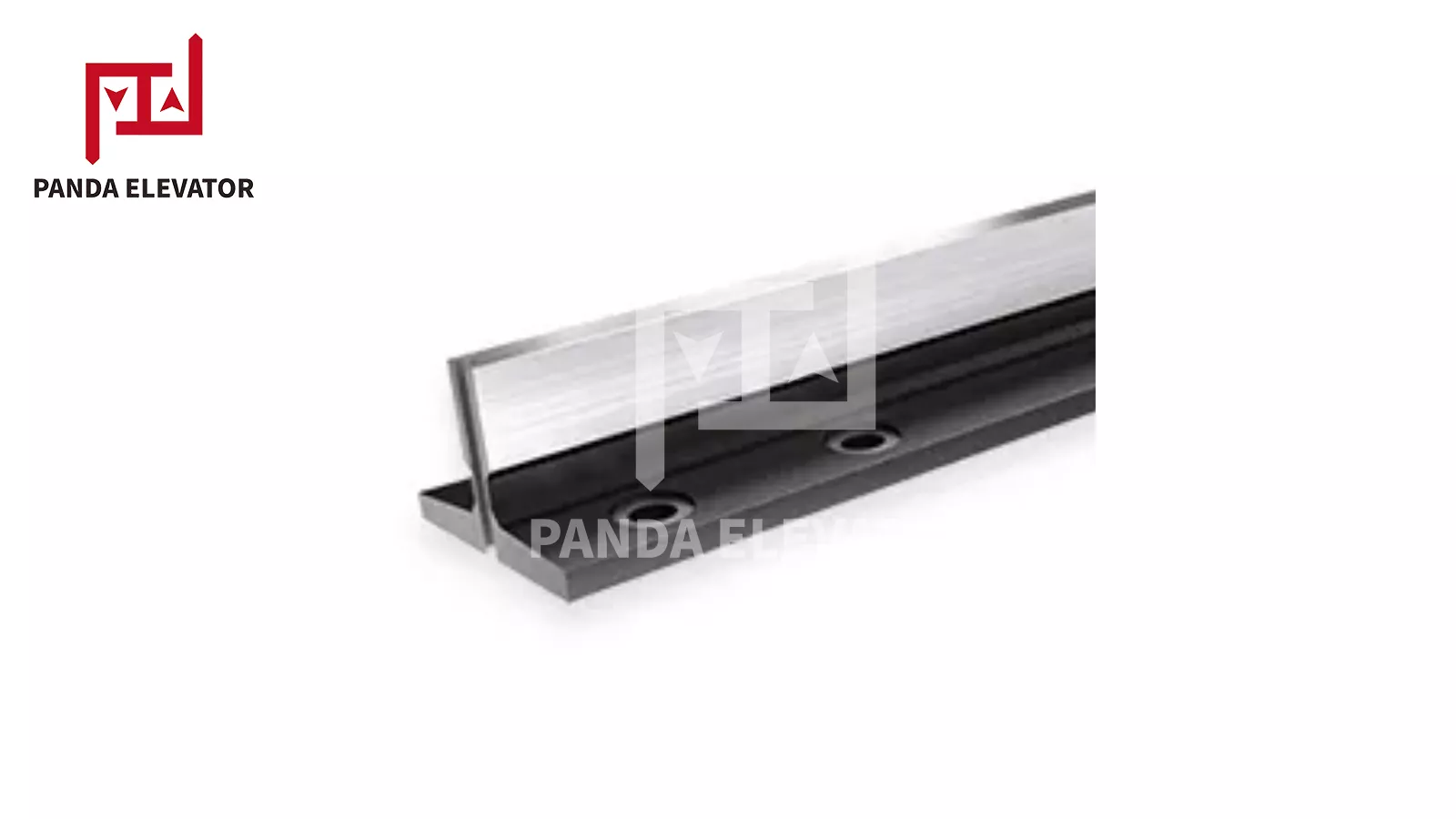
2.6 Guide Rails and Guide Shoes
Guide rails provide a controlled vertical path for the elevator car and, where applicable, the counterweight. They are installed along the elevator shaft and secured with rail brackets.
Guide shoes or roller guides connect the moving assemblies to the guide rails. They help maintain alignment and limit unwanted lateral movement during travel. Rail dimensions, joint quality, bracket spacing, and installation accuracy all affect system performance.
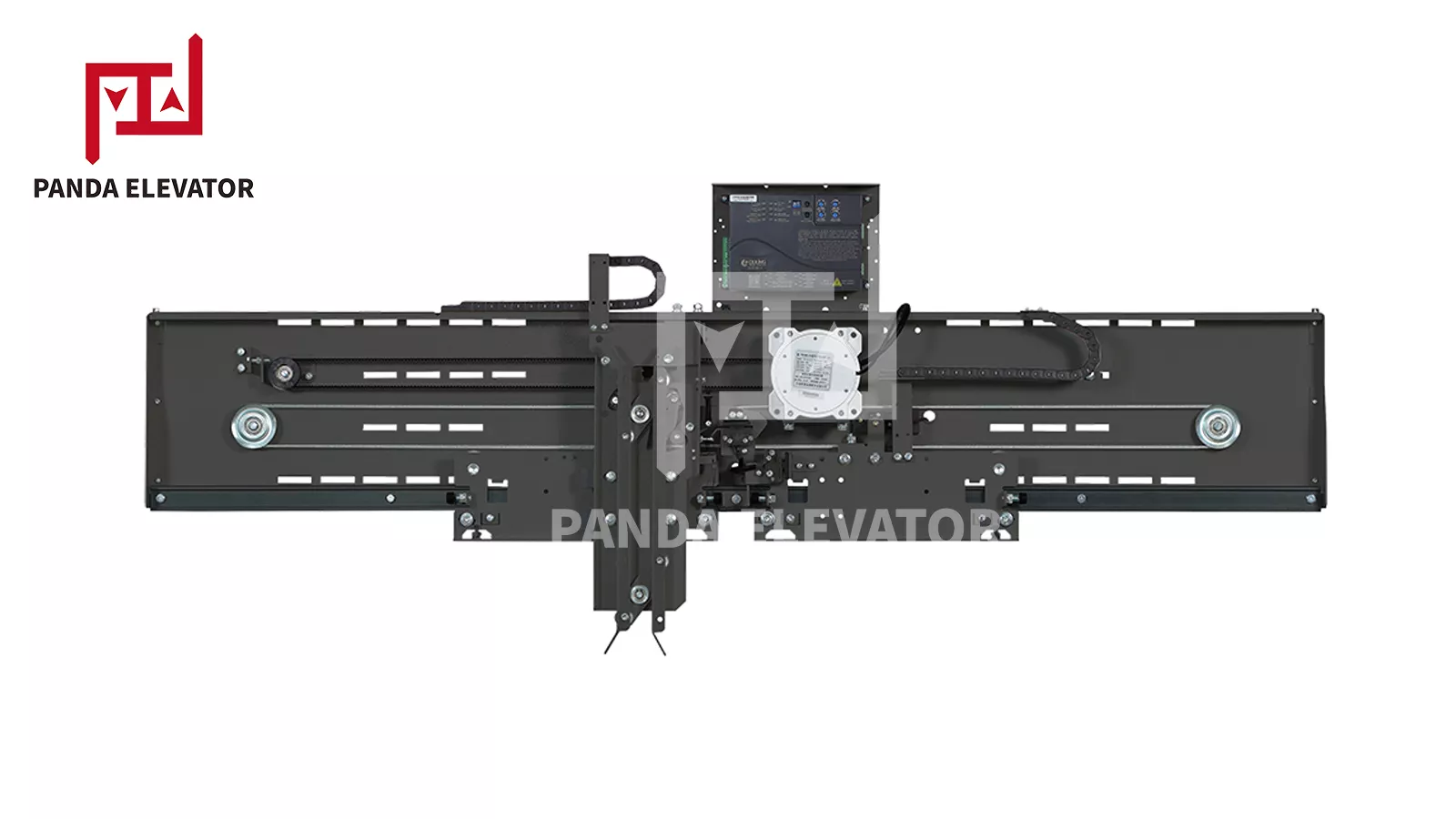
2.7 Elevator Door System
The door system controls access to the elevator car and landing entrances. Common parts include car doors, landing doors, door operators, door hangers, tracks, rollers, locks, and protective sensors.
The door system must coordinate with the controller and safety circuits. The elevator should not operate normally when required door-lock or safety conditions are not satisfied.
2.8 Elevator Safety Devices
Safety devices are designed to reduce risks during abnormal operating conditions. Depending on the elevator design, these may include a speed governor, safety gear, buffers, door interlocks, final limit switches, and other protective devices.
Each device has a defined role and must be selected and installed according to the elevator design and applicable safety standards. Safety components should never be substituted based only on physical appearance or approximate dimensions.
3. Main Components of a Traction Elevator System
Traction elevators use an electric motor and a rope- or belt-based suspension arrangement to move the car. They are widely used in residential, commercial, and high-rise buildings. Their configuration can vary depending on whether the machine is installed in a machine room or within the hoistway.
3.1 Traction Motor and Sheave
The motor supplies rotational power, while the traction sheave transfers that power to the suspension ropes or belts. The interaction between the sheave and suspension members creates the traction needed to move the car.
3.2 Brake Assembly
The brake assembly helps hold the elevator stationary when it is not moving and provides controlled stopping as part of the drive system. Its design and monitoring arrangements depend on the machine and elevator configuration.
3.3 Counterweight and Suspension Arrangement
The counterweight balances a portion of the car load. Suspension ropes or belts connect the car and counterweight through the traction machine. The arrangement may use different suspension ratios depending on the design.
3.4 Guide Rails and Rail Accessories
Guide rails, fishplates, brackets, and fasteners form the guiding infrastructure. Accurate installation helps maintain smooth movement and provides the necessary alignment for the car and counterweight.
For related products, buyers can explore Panda's elevator traction system components category.
3.5 Traction Elevator Component Overview
| Part | Function | Important Selection Factors |
|---|---|---|
| Traction machine | Drives the suspension system. | Rated load, speed, motor power, sheave, mounting arrangement. |
| Brake | Holds and stops the elevator as designed. | Machine compatibility, rated braking requirements, inspection criteria. |
| Suspension ropes or belts | Support and move the car and counterweight. | Diameter or profile, construction, rated load, suspension design. |
| Counterweight | Balances the elevator car. | Frame dimensions, weight configuration, system design. |
| Guide rails | Guide the car and counterweight. | Rail profile, dimensions, material, alignment requirements. |
When sourcing traction elevator components, buyers should confirm the elevator's rated load, speed, suspension arrangement, and original equipment specifications. These details help determine whether a component is suitable for the intended installation.
4. Main Components of a Hydraulic Elevator System
Hydraulic elevators use pressurized fluid to move a piston or ram connected to the elevator car. They are commonly considered for low-rise applications, although the suitability of a specific design depends on the building, load, travel, and local requirements.
4.1 Hydraulic Power Unit
The hydraulic power unit supplies pressurized oil to the lifting cylinder. It generally includes an electric motor, hydraulic pump, oil reservoir, valves, and associated piping.
4.2 Hydraulic Pump
The pump moves hydraulic fluid from the reservoir into the hydraulic circuit. Its flow rate and operating characteristics influence the elevator's lifting performance and travel speed.
4.3 Hydraulic Cylinder and Piston
The cylinder houses the piston or ram. When hydraulic pressure acts on the piston, it produces the force required to raise the elevator car. The cylinder arrangement may be direct-acting or use a roped configuration, depending on the design.
4.4 Control Valves and Hydraulic Lines
Valves regulate the direction and flow of hydraulic fluid. Hydraulic lines connect the power unit to the cylinder and must be suitable for the system's operating pressure and installation conditions.
4.5 Hydraulic Buffer
A hydraulic buffer may be installed in the elevator shaft as part of the safety arrangement. Its specifications must match the elevator's design parameters, including relevant speed and load conditions.
Before purchasing hydraulic elevator components, verify the hydraulic system design, rated load, operating pressure, installation arrangement, and relevant product dimensions. A component that appears similar may not meet the requirements of a different hydraulic configuration.
5. Elevator Control System Components
The elevator control system coordinates the movement of the car, responds to passenger requests, monitors operating conditions, and communicates with other equipment. It is one of the most important parts of a modern elevator installation.
5.1 Elevator Control Cabinet
The control cabinet houses the main controller and related electrical equipment. Depending on the model, it may contain control boards, relays, terminals, protection devices, and communication interfaces.
Panda provides products in its elevator control system category, including elevator control cabinets and integrated controller products.
5.2 Integrated Elevator Controller
An integrated elevator controller combines key control functions into a coordinated unit. For example, Panda lists the Monarch NICE3000 elevator integrated controller for elevator applications. Buyers should confirm the exact model, motor arrangement, control requirements, and compatibility before selecting a controller.
5.3 Variable Frequency Drive
A variable frequency drive (VFD) controls motor speed by adjusting the electrical frequency and voltage supplied to the motor. In elevator applications, the drive works with the controller to manage acceleration, deceleration, and leveling.
5.4 Encoder and Position Sensors
Position feedback devices help the control system determine the motor or car's position and movement. Depending on the elevator design, these devices may include encoders, leveling sensors, and floor-position switches.
5.5 Elevator Communication and Display Boards
Display boards provide floor information, direction indicators, and other operating messages. Communication between the controller and display equipment allows passengers to understand the elevator's current status.
5.6 Car Operating Panel (COP)
The Car Operating Panel (COP) is installed inside the elevator car. It typically includes floor-selection buttons, door-open and door-close buttons where provided, emergency communication interfaces, and display functions.
Panda's elevator operation panel COP category provides options for elevator car operation and passenger interaction. Buyers should check button layout, floor count, dimensions, communication interface, and finish requirements.
5.7 Landing Operating Panel (LOP)
The Landing Operating Panel (LOP) is installed at a landing outside the elevator. Passengers use it to call the elevator, while indicator functions may show direction or operating status.
See Panda's elevator landing operation panel LOP for product options.
| Control Component | Installation Location | Function |
|---|---|---|
| Control cabinet | Machine room or designated control location | Houses and organizes the main control equipment. |
| Integrated controller | Control cabinet or designated installation location | Coordinates elevator operating logic. |
| Variable frequency drive | Control cabinet | Controls motor speed and movement profile. |
| Encoder or position sensor | Drive or position-monitoring arrangement | Provides movement or position feedback. |
| COP | Inside the elevator car | Allows passengers to select destinations. |
| LOP | At each served landing | Allows passengers to call the elevator. |
| Display board | Car or landing panel | Displays floor and operating information. |
When selecting control system components, confirm the controller model, motor type, communication interface, electrical ratings, and panel configuration. These details are particularly important when replacing existing equipment or integrating components from different manufacturers.
6. Elevator Door System Components
The elevator door system controls entry and exit at the car and landing levels. It must operate in coordination with the elevator controller and door safety circuits. A door fault can prevent normal elevator service even when the drive system is functioning correctly.
6.1 Door Operator
The door operator supplies the movement needed to open and close the car doors. It may use an electric motor, transmission mechanism, controller, and related mechanical components.
6.2 Car Door Panels
Car door panels form the moving entrance of the elevator car. Their dimensions, material, finish, and opening arrangement depend on the car design and building requirements.
6.3 Landing Doors and Door Locks
Landing doors provide access to the elevator at each floor. Door locking devices help ensure that the landing doors remain secured under the required operating conditions. The safety circuit monitors the relevant door-lock status.
6.4 Door Hangers, Tracks, and Rollers
Hangers support the door panels, while tracks and rollers guide their movement. Wear, contamination, misalignment, or damaged rollers can cause noise and irregular operation.
6.5 Light Curtains and Protective Sensors
Light curtains and other protective devices detect obstructions in the doorway. When an obstruction is detected, the door control system can respond according to its programmed safety logic.
When sourcing door system components, buyers should check door opening dimensions, panel configuration, operator model, mounting arrangement, and electrical interface. Door locks and protective sensors must also be compatible with the elevator's approved safety system.
7. Elevator Safety Components
Safety components help protect passengers, maintenance personnel, and elevator equipment. They work with the control system and mechanical assemblies to respond to abnormal conditions. Their selection, installation, testing, and maintenance must be handled by qualified elevator professionals.
7.1 Overspeed Governor
The overspeed governor monitors elevator speed. If the elevator exceeds the defined triggering threshold, the governor can activate the associated safety mechanism according to the system design.
7.2 Safety Gear
Safety gear is a mechanical device designed to engage with the guide rails under specified abnormal conditions. It is commonly associated with the overspeed protection arrangement and must be matched to the elevator's rated parameters.
7.3 Elevator Buffers
Buffers are installed at designated locations in the elevator shaft to absorb energy when the car or counterweight reaches the end of its permitted travel under specified conditions. Common types include rubber buffers and hydraulic buffers.
Panda's elevator safety components category includes safety-related products such as buffers, guide shoes, and other elevator parts.
7.4 Hydraulic Buffer
A hydraulic buffer uses fluid resistance to absorb impact energy. Its application depends on the elevator's speed, load, and installation requirements. For example, Panda lists the OH-80 hydraulic buffer as a product with model-specific parameters that should be checked before ordering.
7.5 Rubber Buffer
Rubber buffers use elastic material to provide cushioning in the designated elevator installation. Panda's OH-J11 rubber buffer is one example of a model-specific product. Its dimensions and application must be verified against the elevator's technical requirements.
7.6 Door Interlocks and Limit Switches
Door interlocks monitor whether landing doors are secured, while limit switches provide position-related signals at designated points in the elevator shaft. These devices are part of the wider safety and control arrangement.
For safety-related replacement parts, confirm the exact model, rated parameters, dimensions, and approved application. Product selection should be based on the elevator's technical documentation rather than visual similarity alone.
8. Electrical and Operating Components
In addition to the main controller and drive, an elevator uses a range of electrical and operating components to provide power, signals, passenger communication, and monitoring. These devices support the coordination of the elevator's mechanical and control systems.
8.1 Power Supply and Protection Devices
The electrical supply provides energy to the drive, controller, lighting, door operator, and auxiliary equipment. Protection devices help protect electrical circuits against specified fault conditions. Their ratings must match the system design.
8.2 Control Wiring and Communication Cables
Wiring connects the controller to the motor, sensors, operating panels, door equipment, and safety devices. Cable type, conductor size, shielding, routing, and connector arrangements should follow the equipment specifications.
8.3 Leveling Sensors
Leveling sensors provide information used to position the elevator car accurately at a floor. Their type and installation position depend on the controller and elevator design.
8.4 Emergency Communication Equipment
Emergency communication equipment enables passengers to contact assistance when needed. Depending on the installation, this may include an emergency alarm button, intercom, or other communication device.
8.5 Lighting, Ventilation, and Auxiliary Equipment
Car lighting, fans, and related auxiliary equipment contribute to passenger comfort and usability. These components should meet the electrical and environmental requirements of the elevator installation.
When purchasing electrical and operating components, verify voltage, current ratings, wiring connections, signal type, dimensions, and compatibility with the existing control system. Product documentation is especially important for replacement equipment.
9. How Do Elevator Components Work Together?
An elevator operates through coordinated signals and mechanical movement. When a passenger requests a floor, the controller processes the request, checks operating conditions, and coordinates the drive and door systems.
- Passenger request: A passenger presses a landing call button on the LOP or selects a destination using the COP inside the car.
- Signal processing: The controller receives the request and determines the appropriate operating response based on elevator status and programmed logic.
- Safety condition check: The control system checks relevant operating and safety signals, including door-lock and other required circuit conditions.
- Door closing: The door operator closes the car and landing doors. The elevator proceeds only when the required conditions are satisfied.
- Car movement: In a traction elevator, the drive machine moves the suspension arrangement. In a hydraulic elevator, the power unit supplies fluid pressure to the lifting cylinder.
- Position monitoring: Sensors and feedback devices provide information about car movement and position to the controller.
- Floor leveling: The controller coordinates deceleration and stopping so the car reaches the designated landing position.
- Door opening: Once the required stopping and door-release conditions are met, the door operator opens the doors for passengers.
This process depends on communication between the control system, drive equipment, sensors, door devices, and safety circuits. A fault in one component may affect the operation of the entire elevator, which is why troubleshooting should consider the complete system rather than replacing parts without diagnosis.
10. How to Select the Right Elevator Components
Selecting elevator parts requires more than matching a product name or appearance. A replacement component must be compatible with the existing elevator design and satisfy the required technical and safety specifications.
10.1 Identify the Elevator Type
First, confirm whether the installation is a traction elevator, hydraulic elevator, or another specialized configuration. The drive arrangement determines which components are applicable.
10.2 Confirm Rated Load and Speed
Rated capacity and operating speed influence the specifications of the drive machine, suspension system, safety devices, and other mechanical parts. Always use the elevator's technical documentation when checking these values.
10.3 Check Model and Interface Compatibility
For controllers, drives, panels, sensors, and communication devices, verify the model number, electrical ratings, wiring arrangement, signal type, communication protocol, and software or parameter requirements where relevant.
10.4 Verify Dimensions and Installation Conditions
Mechanical parts such as guide rails, guide shoes, buffers, door panels, and brackets require accurate dimensional matching. Check mounting positions, connection details, available space, and installation constraints.
10.5 Review Quality and Compliance Documentation
Ask suppliers for relevant technical drawings, product specifications, inspection records, and applicable conformity documentation. Requirements differ by market and elevator application, so confirm the standards that apply to the specific project.
10.6 Evaluate Supplier Support
A reliable supplier should be able to provide clear product information, model confirmation, technical communication, and support with replacement-part identification. For customized or non-standard components, confirm drawing approval and production details before placing an order.
| Selection Factor | What to Confirm | Why It Matters |
|---|---|---|
| Elevator type | Traction, hydraulic, or specialized system | Determines the applicable component design. |
| Rated load and speed | Project specifications and equipment nameplate data | Affects mechanical and electrical requirements. |
| Model compatibility | Manufacturer, model number, interface, and revision | Reduces the risk of incompatible replacement parts. |
| Dimensions | Drawings, mounting points, and connection sizes | Helps ensure correct installation fit. |
| Documentation | Technical data, inspection records, and applicable certificates | Supports quality and compliance verification. |
| Supplier service | Technical support, lead time, warranty, and after-sales response | Helps manage procurement and maintenance risks. |
Preparing a component specification sheet before requesting quotations can make supplier communication more efficient. Include the elevator type, original part number, dimensions, operating parameters, required quantity, and relevant drawings whenever available.
11. Elevator Component Maintenance and Replacement
Regular maintenance helps identify wear, damage, and abnormal operating conditions before they lead to more serious problems. Maintenance intervals and procedures should follow the elevator manufacturer's documentation, applicable regulations, and the requirements of the installation.
11.1 Inspect Mechanical Components
Qualified maintenance personnel should inspect relevant mechanical assemblies, including guide rails, guide shoes, suspension components, door mechanisms, and buffers. Any abnormal wear, looseness, corrosion, or damage should be evaluated against the manufacturer's criteria.
11.2 Check Electrical and Control Equipment
Controller faults, abnormal signals, damaged wiring, loose connections, and sensor problems can affect elevator operation. Diagnostic procedures should be carried out using approved methods and equipment.
11.3 Monitor Door Operation
Door movement should be checked for unusual noise, inconsistent opening or closing, damaged rollers, and alignment problems. Door locks and protective devices require particular attention because they are related to safe operation.
11.4 Replace Parts Based on Technical Requirements
When a component needs replacement, confirm its exact model, dimensions, electrical specifications, and approved application. A visually similar part may have different operating characteristics or safety ratings.
11.5 Keep Maintenance Records
Records of inspections, fault reports, replaced components, and service work help maintenance teams identify recurring problems and plan future procurement. They also make it easier to verify the installed equipment configuration.
Keeping accurate records of installed component models and previous replacements also helps maintenance teams avoid ordering incompatible parts. When replacement is required, use the original technical documentation and obtain professional confirmation for safety-related components.
12. FAQs About Elevator System Components
12.1 What are the main components of an elevator system?
The main components generally include the drive system, elevator car, suspension arrangement, guide rails, controller, door system, operating panels, electrical equipment, and safety devices. The exact parts depend on whether the elevator is traction-driven, hydraulic, or another type.
12.2 What is the most important component of an elevator?
No single component operates independently of the rest of the system. The drive machine provides movement, the controller coordinates operation, and safety devices protect against specified abnormal conditions. Reliable operation depends on the correct design and interaction of all these components.
12.3 What is the difference between COP and LOP?
COP stands for Car Operating Panel and is installed inside the elevator car for floor selection and passenger control. LOP stands for Landing Operating Panel and is installed at a floor landing so passengers can call the elevator.
12.4 What is the difference between a traction and hydraulic elevator?
A traction elevator uses an electric motor and a rope- or belt-based suspension system to move the car. A hydraulic elevator uses pressurized fluid and a cylinder or ram to lift the car. Their drive components, installation arrangements, and maintenance requirements differ.
12.5 What does an elevator controller do?
The controller processes passenger requests and signals from sensors and other devices. It coordinates the drive, door operation, stopping, leveling, and relevant safety conditions according to the elevator's control logic.
12.6 What are elevator buffers used for?
Buffers are installed at designated locations in the elevator shaft to absorb energy if the car or counterweight reaches the end of its permitted travel under specified conditions. Rubber and hydraulic buffers are examples of different buffer designs.
12.7 How do I know whether an elevator replacement part is compatible?
Check the original manufacturer's information, elevator model, component part number, technical drawings, dimensions, electrical ratings, interfaces, and operating requirements. For safety-related parts, obtain confirmation from the elevator manufacturer or a qualified elevator professional.
12.8 Where can I find elevator system components?
Elevator components can be sourced from elevator manufacturers, authorized distributors, and specialized spare-parts suppliers. Before ordering, confirm the product's technical specifications, compatibility, documentation, and after-sales support.
13. Conclusion
Elevator system components form an interconnected mechanical, electrical, and safety network that determines how an elevator operates. The drive system moves the car, the controller coordinates operation, the guide system maintains alignment, the door system manages passenger access, and safety devices help protect the installation under abnormal conditions.
For elevator contractors, maintenance companies, and equipment buyers, understanding these components makes it easier to select compatible products, reduce replacement errors, and plan reliable maintenance. Before purchasing or installing elevator parts, always confirm technical specifications, product compatibility, and applicable safety requirements.
Panda provides a range of elevator products, including control system components, operating panels, traction system parts, and safety-related products. Visit Panda Elevator Parts to explore its product range, or review the elevator parts catalog, elevator control systems, and elevator safety components for more information.